How the Arrows flew: MLR 2020

The Toronto Arrows have been a revelation in Major League Rugby since joining the league last year (MLR’s second). In their inaugural year, the Arrows reached the semi-final stage. 

The winter weather in the Toronto area meant that for the beginning of the 2020 season the Arrows played all their games away from home – before the Covid-enforced break. While the season was shortened, in the five games the Arrows played we learned a significant amount about Canada’s team and how to construct a gameplan to create a winning team.

Off the field, the Arrows have spoken strongly about wanting to become a pathway for Canadian talent, and the next generation can take heart from the system being created. This piece aims to look into the Toronto Arrows game-plan, and break down how they became serious title challengers.

The Arrows First Phase Magic

Every attack in rugby starts with a “platform”, whether this be lineout, kick, turnover or scrum – all are examples of platforms. The Arrows were good off most of their platforms. You don’t get to the top of the conference being mediocre. But while they were good off most of their platforms, they were extraordinary off the four man lineout. This platform enabled the Arrows to get a strong start to the majority of their attacks.

The launch from the four man lineout was a staple of the Arrows attack. The best way to examine the play is to pick an example which resulted in an outstanding score. While there were a couple of options, the best example was the score versus Rugby ATL. 

The sole Canadian side had split their four men into two distinct sections, with a back pod of three and a single front man. The lineout’s back pod contains numbers 6,7,8 while number 5 marks at the front of the lineout. The lack of a Prop within the set-up is deliberate and increases the speed of the lineout. The Atlanta set up however, does include Props. The front marker is the Tighthead Prop, meaning he is matched up against the Arrows’ Lock. Meanwhile, the ATL Loosehead is positioned at the back of the lineout. 

The split in the Arrows has created a target zone. This targets the inside of the Atlanta front marker, and aims to exploit the Prop’s lower mobility. The split is also more central to allow the Scrumhalf to take the ball on the move, rather than distributing from a standing position. 

In the movement phase of the lineout, the Arrows have a dummy jump from the Number 8 aiming to unsettle the Atlanta pod. Atlanta appears to be expecting this with a specific defensive system. Rather than the number 4 moving out of the way, the Atlanta Lock instead pushes across to be a lifter. This gives the Arrows an advantage, however, as Paul Ciulini, 5, is able to move without turning. This earns them a split-second advantage. This gain within the movement phase has a large effect in the final competition for the ball. 

The Rugby ATL number 4 turning puts the Atlanta lineout at a disadvantage when challenging the Arrows. While Ciulini is able to stay square throughout the lift and reach perfect form, the Atlanta lifter pivots and lifts away from his body. This limits the height of the ATL challenge, and ends up simply surrendering the ball and throwing the jumper across the lineout.

Due to the lack of significant challenge from the Atlanta pod, the ball comes away relatively cleanly. This allows Andrew Ferguson to attack onto the ball at a steady pace. This smooth delivery from the Scrum Half allows the strike team to fire into life. 

The strike team is positioned in the center of the field, attacking off the Flyhalf. They are set up in a simple spear head shape, with the Centre in front of the two Props. This means the Arrows can split the field and have dominant carriers on either of the options they choose. In this case, the Arrows decide to have the Centre fade across the front of the pod. The bill is given to the prop who strikes on an out to in line against the Rugby ATL drift. 

The lineout structure then plays a second crucial role in the make up of this midfield formation. With the Centre having faded across for the second phase, the number 4 Lock is used in the clear. He had been running the inside line, tracking on the Fly Half, and as such plays a role in contracting the ATL defence. The effect of the number 4 is on the inside defender of the press.

Splitting the Atlanta defence is the objective here for the Arrows. With the 12 fading across the pod, it means he can act as a distributor or strike runner on the next phase without having to win the race around the corner. The inside run of the number 4 Lock has pulled the inside defender higher, and he has to work further before wrapping. This is a two-phase strategy aiming to break the Atlanta defence systematically. 

Before moving onto the second phase of the Atlanta score, it is worth reflecting on why this first phase move is so successful. The move is based on a common shape, so defenders will make preconceptions about the play. The formation was used to great effect, securing a try against the Seawolves the week before with a subtle change.

There is a subtle change within the lineout. You’ll notice on this occasion the number 5 Lock (circled in green) is positioned at the tail. He acts as the back lifter, but this positional change also enables the number 4 Lock to be shifted to the front of the lineout. This brings in a decoy threat to the center of the field. This changed with the number 4 Lock shifting into the lineout and the Winger (circled in red) becoming an option. This little distinction off the same shape is key for the Arrows in maintaining variability and introducing doubt to the opposition defence. 

Shifting focus back to the Atlanta try, the Arrows are ready to enact the second stage of their attacking game plan. They have secured a quick ball, the inside option clearing the ruck alongside the second Prop. 

The second phase again uses a strike formation, aiming to open a weak shoulder and allow a hidden runner to carve through the middle. There are a lot of moving parts to break down this try, and each one plays an important role. 

The first role is carried out by the Inside Centre who runs a blocking line. A secondary role is played by the Outside Centre, who comes late onto the ball and moves toward the wide channels creating multiple decisions and therefore problems for the defence. The scoring role is played by the Left Winger. While the break is magical, and involves a lot of skill and talent, the positioning on the previous phase shows Leivas positioning himself perfectly.

Leivas attacks from a hidden position, starting the phase behind the screen runner. As opposed to a distributor who would want to be further across, the Winger tracks in behind the screen runner and ends up concealed within the secondary pod.

As shown on the pitch above (camera angles not great) we can see all 3 roles in perfect harmony. The Winger begins hidden behind the Inside Centre, who manages to create the split by escorting the Atlanta Openside away from the hole.

The outside threat, again with a small throwback to Dan Moor’s try v Seattle, convinces the Atlanta defence to push high. As shown above, the overlap convinces the back field coverage that the ball will be going wide, with the Fullback shifting his weight, ready to make a covering tackle. The double tackle aims to stop any spread of the ball, but the number 13 can free his arms and the inside is attacked. 

The Arrows have a tendency to overload the wide channels in attack. This try v Atlanta and the score v Seattle are evidence of this. However, again there are small variations, as DOR Silverthorn aims to disguise the Arrow’s intentions. Against Seattle, the Left Winger targets the outside defender instead, with an inside trail runner from 10 holding the defence.

The Arrow strike plays are formidable. But what if they don’t work? The Arrows require a second option to play from, and this transition is another dangerous part of Toronto’s arsenal. 

System Success: The Arrows 1-3-3-1

The main system used by the Arrows when they are unable to score is their 1-3-3-1 shape (broken down here: https://theanalysisguy.sport.blog/2020/02/19/building-blocks-deliver-arrows-victory/ ). The use of formations is something more akin to football, but in modern rugby the spread of players across the pitch is becoming more refined and specialised. The 1-3-3-1 shape is probably the most common shape across teams, as there is plenty of room for manoeuvre within the shape. By positioning two pods of three Forwards in the centrefield, teams have multiple options on attack. These also interact with the play making axis and offer different options depending on how the team wants to use them.

The Arrows are an expansive team well adapted to the 1-3-3-1 structure. Across three of their games I measured using Rugbycology (versus ATL, Houston, and Austin), they passed more than their opponents. There were significant differences in the pass per phase stat against Austin and Houston, with the Arrows bringing a really expansive attack to both matches. This expansive attack is enabled by the use of the 1-3-3-1 formation.

The formation is shown clearly in the game against Houston. Starting from a kick receipt the Arrows are able to get into formation early. As shown in the picture below, clear pods are being formed for the play back in the field. The wide ruck plays a crucial role in creating the formation. 

The wide ruck is set up from a carry by the single forward on the right of the set up. The inside pod is circled in red. By positioning close to the 15m line they can get toward the outside of the Houston press and really establish a strong platform. It also enables the backs utilized in the wide ruck to be used in the following plays.

Outside the red-circled player’s crucial backline, alignment is beginning for the next phases. Joined by the yellow line, the second pod of 3 is beginning to assemble and align themselves to receive the ball from the Flyhalf. In a secondary role, Sam Malcom, shown in the blue hexagon, is rotating to become a second playmaker. This is a key shape for the Arrows with the stellar Fullback a crucial distributor out wide. The final part of the picture is Manuel Diana, the strong carrying back row who takes the wide position out wide giving the Arrows a whole-field threat. 

This picture is also repeated against Austin. Again starting from a kick, the Arrows begin to gain their shape. The second phase after the kick was played to a carry from the left pod of 3 (blue square), this stretched Austin to the far side.

The play has led to a large defensive overload on the blindside with five Austin players marking two rather disinterested Arrows players. Instead, the Arrows play to the openside, using a pod of 3 to attract the initial press. The ball is then released to a deep lying playmaker, Fly half Tayler Adams, who spreads the ball further to expose the wide channels, allowing the Arrows to make significant ground.

Out wide, the Arrows make long gains reaching the Gilgronis 10m line. The carry is made by the archer himself, Dan Moor, with the wide forward involved in securing the breakdown. This enables quick and clean ball for the following play, involving the centre pod of 3.

The situation created by the Moor run is incredibly similar to the one at Sam Boyd stadium against the Sabercats. There is an electric feel to the Arrows attack, as it methodically follows the plan exploiting poor defence by the Austin side. 

The play back inside to the pod of 3 after the break is also similar. This is because the Arrows are aiming to create what is known as a 80/20 split. The name is simply generated, looking at the width of the field as a percentage on both sides of the ruck. By getting to just outside the 15m line, it opens up a significant blindside – should the Arrows wish to hit back. Importantly, it opens the openside, allowing the Arrows to use their full-pitch threat.

The wide play allows the Arrows to use the pitch and bring in second distributor Malcolm, attacking outside just like he did against Houston. However, rather than spread the ball, he cuts inside, finding ground despite attacking a more organised Austin defence. This is because of the way the Arrows like to use a split pod when attacking on the 80/20. Rather than having a standard arrowhead, instead they position a short option – in this case cutting across the face of Adams, with a double running threat out wide. 

This split pod means the Arrows’ focus is wider, with men out wide including a backrower attracting outside defenders. This opens the hole for Malcolm to attack through and make ground.

Having made ground, the Arrows switch direction, hitting the Left Winger who acts as a hybrid option, replacing the Hooker in the centre pod of 3. As a faster and more agile player, he offers a different threat, while Hooker Quattrin can target the breakdown and secure quick ball. From the quick ball, the Arrows enter a same way pattern using a combination of carrying 3 man pods with additional backs to offer a varied threat, aiming to reach a wide channel as they had against Houston.

By attacking the same way, the Arrows forwards can fulfil their roles easily. It also stretches the Houston defence, as it forces them to mark up and react to threats while continually travelling backwards. The deep lying 13 threat, coming on the inside of the pod above, also offers additional direction to the pods. 

It is also incredibly efficient, as the Gilgronis keep players on their feet, so the Arrows don’t need to secure each ball in the ruck. The nature of travelling the same way also keeps the same defenders under pressure. In this case, the Austin Openside and Outside Centre deal with the brunt of the work.

Once the Arrows reach the 15m line, they again have split the pitch 80/20. However, this time they want to reset and work to the touchline, relying on their skill to fully utilise the Blindside. This creates a wonderful try for Dan Moor and shows how effective the Arrows’ sustained phase play can be.

But the same-way pattern has one final hand in the Moor try. Not only is it wonderful handling by Adams to free Moor, but with a great wide pass from the base there is significant deception from the Arrows.

In truth the Gilgronis should do better, Adams creates a 3 on 2 by sliding about a meter, but the threat of a pick and go means the Gilgronis have numbered up. The carry on the previous phase by Diana ties in two Gilgroni tacklers, with the Austin Prop (now at guard) also absorbing the blow. The Arrows have also beaten the Gilgronis in the race for width using the same-way pattern. As the ruck is set, the Gilgronis’ 13 is working through traffic. The high work-rate and continual focus on 13 has broken the Austin side, allowing the Arrows to score in the corner.

All of the examination above has been in isolation, focussing on either the strike-play or the phase-play of the Canadian side. But against the Seattle Seawolves we see how Toronto blended these two strengths to score a try. The attack starts from a four man lineout, again using the standard set up. Following the lineout, they transfer the ball, maintaining their shape and using a pod system, combined with backs acting as hybrid players. This stresses and eventually overwhelms the Seattle defence.

The simple four man lineout follows a similar pattern as above, with a dummy jumper leaving the line, and then ball off the top. Playing off 10, the standard structure is more disguised, though the basic formation is still present. 

However, it is the slight change which makes it so effective. The lead running Centre acts alongside the inside forward to screen Dan Moor. With Moor hidden, the Seattle defender fixes onto the forward. Moor then accelerates late, beating the tip of the Seattle defence and breaking through.

For the next two phases, we again see the Arrows enter a same-way pattern. Using two pods of 3, the ball can be quickly carried to the wide channel. For the final ruck, notice that the Inside Centre has been used as a secure option, while at the start of the clip, 13 has been used as a clearing option. 

Having reached the edge, the Arrows then continue attacking in the field. Being close to the line, the Arrows’ attack begins to morph, becoming a hybrid of both backs and forwards. It is admittedly an easier transition – the use of extra bodies increases the speed. The same-way attack also results in people becoming more automatic, another method for increasing speed.

The final two phases for the try deserves their own short breakdown: There are three major building blocks which generate the score. First, the quick ball of previous phases has disoriented the Seattle Seawolves defence. This is mainly shown through a lack of Seawolves defenders by the breakdown. Now whether this is inexperience or simply Toronto skill, the Seawolves have left a gaping hole, only filled by the Prop, Sears-Duru. 

The second building block of the score is the isolation of a single player. Now, not only are the Seawolves on the back foot and in disarray, but this is all magnified and focussed upon one player. Sears-Duru (blue square), is faced with two options: either he will focus on where the ball is, or take the route of where it may go. 

Sears-Duru makes a clear choice in focussing on the ball. His eyes become fixed on the ball, and he rests on the ruck, waiting to launch at the man at the base. This is where the secondary Seattle player becomes important. The player circled in red eventually sits just behind the try line, possibly waiting to see where he’s needed rather than being proactive. This means the space next to Sears-Duru is unprotected. With the Seattle Prop focussed on the ball, his blindspot creates an area the Arrows can exploit.

Summary

The combination and adaptability of these strengths allowed the Arrows to be a complete team. Despite the shortened season, there are clear signs of growth and strengths which the Arrows can continue to build upon. While I only covered two major parts of the Arrows attack, it’s clear why the team is so strong.

Strike moves are part and parcel of modern rugby, and the Arrows have ability in abundance. The tries outlined earlier all showed their ability from the four man lineout. By using the same set up, Toronto was able to maintain cohesion and also increase deception. They also manipulated defences when they changed their formations.

The ability of the Arrows to strike was not limited solely to the lineout. The try against Colorado is a perfect example of this. The multiple options on the play – using a blocker – is typical of rugby. The easy execution leads to what looks like a simple try.

The move has multiple options and typifies the Arrows. Crucially, the Arrows have hidden the target player from the intended hole (blue square). The strong run from 13 (circled light blue) is designed to act as a blocker and he interacts with the defensive line, hitting the outside shoulder of the defender.

The target runner is available at two opportunities. Either the ball can be passed early, opening the wide attack of the Arrows with Mieres playing a distributing role. This is illustrated by the dashed yellow line. This multiple option run is just a small innovation which made the Arrows hard to defend. 

The run also has the benefit of drawing the cover defender out of the line. The left defender jumps out of line (purple line), aiming to intercept the deep-lying Mieres and tackle him. However, Mieres runs a slightly wider line, leaving the defender grasping air. 

The choice of line is crucial – and another aspect of Arrows’ strike-running formations. This line running is clear with the blocking line run by 13, who manages to hit the outside of the defender and disrupt Colorado’s defence. This prevents any cover reaching Mieres so he can carve through the defence. The final defender makes a small misread, losing connection with inside defenders and pushing to cover the final threat of the Arrows’ formation. 

This strike play has three clear building blocks. First, there is complexity built around simplicity. The result is easy execution and a distracted defence. Second, the line-choice and timing of distribution. Mieres’ fade outside the Colorado defender creates his own opportunity. The blocking line helps to widen the gap before the shape again relies on the simple structure to create what ends up being a simple opportunity. The final building block is continuity of the shape. As said above, the four man lineout strike move was used across all their games, and this scrum move is a variation on a theme. This means that the shape can be used across multiple games with players filling multiple roles, with no real drop-off being evident. In this age of analysis, it also paints a picture, which may cause defences to anticipate the wrong outcome.

Toronto’s attack, however, stretches well beyond 3 phases. They combined their strike-attacks with a clear phase play-attack. The use of a 1-3-3-1 attack enables the Arrows to stress the defence. The use of 3 man pods creates the ability to clear quickly, and also allows interplay. The use of the Centres as hybrid and supporting players within these 3 player pods maintains the speed in attack.

The 1-3-3-1 structure allows the use of the Toronto backs in a variety of roles. Sam Malcolm played a linking role outside. The ability of their Wingers to shift and roam around the field also changes the picture and keeps pressure on the defence. The Arrows transition from strike to phase attack was also well executed. 

There is no better example than the attack from kick-return v Houston Sabercats. By finding width early, the Arrows allow their forwards to settle into formation. This removes work-rate with the backs able to clear out the ruck. This also meant that Diana on the far side could offer a more physical threat – outside the speed and distribution of Sam Malcolm. This combination of threats meant momentum could be kept throughout the attack.

Looking forward to next season, the Arrows are clearly in a good place. 

They have been able to build structures which will form a foundation for future seasons. They also have the individual talent needed to be challengers, even with the departure of Sam Malcolm and Dan Moor. Whether Toronto would have won the MLR Shield this year is up for debate, but their strength would have given them an opportunity.

Thanks to Rhiannon Garth Jons and Karen Gasbarino for proof reading and hopefully making it more coherent. Thanks also to Sam Larner for some inspiration. Check out this small thread around the Arrows starter plays, https://twitter.com/SamLStandsUp/status/1233539241935802370?s=20

Feel free to get in touch. My twitter is @analysisguy0502 – https://twitter.com/analysisguy0502 My Email is sportanalysisworld@gmail.com Happy to answer any questions, and any feedback would be fantastic.

Combining Structure and Flair: Joe Simmonds brace v Harlequins

While lockdown continues the rugby void still needs to be filled. So I have looked back instead at a game in the English Premiership, in order to see what learnings can be taken for when rugby takes. In the following piece, I examine how Exeter converted two opportunities through fly half Joe Simmonds to expose Harlequins. Both tries start from transition based platforms and the skill used to attack from these platforms is marvellous, as Exeter shows how to create and crucially finish opportunities from within a simple but effective structure.

The first try begins from a kick receipt, in Exeter’s Own 50m area. The Harlequins box kick comes from a typical caterpillar ruck. However, while this creates a protection for the scrum half, it does mean that a weakness in the defence is created which Exeter can later expose.

Olly Woodburn takes the catch and then proceeds to attack the defence, crucially getting on the outside of the initial tackler. This means he drags in additional defenders, with both Chisholm and Dombrandt having to make the tackle. Woodburn’s leg drive is also critical because he creates quick ball and the momentum. By hitting the ground with his knees, Woodburn has forced a tackle on his own terms. The supporting players are also dominant, as Ewers wearing 6 matches Woodburn’s position and drives across preventing Chisholm from driving back, while loosehead Alec Hepburn drives from the openside acting as a ballast. Hepburn also manages to lock in Dombrandt who is forced to release the tackle. This allows Nic White to start Exeter’s attack from the clean ball, following a dominant carry.

As Exeter have retreated from the kick they have been able to retain width and stretch Harlequins. This develops an overlap on the open side, due to Quins underfolding. This overlap has placed pressure on Danny Care. Having worked across from his box kick, Care enters the line at pace, and has to enter the line rather than occupying the traditional sweeper role. This leads to a disconnect within the Harlequins line being created and Exeter, through Sam Simmonds, break through the middle. 

Danny Care, circled in light blue, has rushed from the defensive line. He initially aims to apply pressure to the Exeter fly half, but due to the overlap has to immediately drift across with the ball. Care is unable to control his speed so while he pushes ahead he creates a whole in the defence. This is shown by the short red line, where neither Care or Lasike are able to cover. The final part of the Quins defence which is exposed is caused by the previous box kick. The box kick and it’s protection has meant forwards are grouped on one side of the field, and that there is a large gap between the forwards and Danny Care in defence. The lack of cover means that Simmonds can attack into the Quins 22. Woodburns carry from the kick, also meant that the Quins backrow, 6 – Chisholm and 8 – Dombrandt are caught in the previous ruck and the gap is being covered by a lock. This creates the disparity in speed that Simmonds can take advantage of.

Following the break, Exeter continued with high tempo play. Harlequins overload the blind side of the ruck, this opens up the hole on the inside of Cavubati. White makes significant ground from his snipe but it allows Quins time to regain structure. 

Exeter lost some speed for the next phase with White trapped in the ruck. The carry from the prop is crucial, as while slower it has two roles. Firstly, it draws in two Harlequins tacklers, with the secondary tackler being caught on the ground. Secondly, it begins a trend of same way attack. Following the break Exeter’s attacks traveled in one direction, towards the “sunny” side of the pitch. This same pattern is present in the following phase as well. 

The following phase Exeter attacked the same way again, this time playing “Off 10”. The tight line drags in 3 Harlequins tacklers. The width of the carry is also important as it leaves Harlequins short on the blindside, and Harlequins backrow all fold on to the “sunny” side of the pitch.

By examining the phase from a tighter angle the magnitude of carry can be seen. Elvis Tainoe makes the carry targeting the middle of the Harlequins defensive pod. This is effective because it forces all 3 defenders to make the tackle. The slight wrapping of Exeter players to the right side, then helps drag additional Quins around with 5 Harlequins defenders folding around the ruck. Lambert returns from the tackle, and fills the guard position on the left hand side and fills the defence. This means a slow fringe defence is in place and Exeter can strike.

As Harlequins have overfolded, Nic White switches play. White has multiple options on his snipe. His extra steps across the face of the Harlequins defence draws the Quins. The slight block by screen runners causes multiple Quins defenders to be dragged in. Nic White is able to pull it back to Joe Simmonds who attacks and begins challenging the wider Quins defenders.

The inside sniping by Nic White and the use of forward screens has opened up the Quins defence. This is shown in the different angles of the defenders. While the inside defender has a total ball focus, the outside defender is drifting from a deeper position and is covering the outside two defenders. Simmonds gets outside of the inside defender to finish. The burst of acceleration beating the defender.

This first try then is an exquisite example of attack from a kick. By attacking and identifying  where the Quins defence were unable to match Exeter numbers. This attack through transition uses a simple structure, with players knowing their roles and stretching Harlequins. The second aspect of the attack was the control and composure used in Harlequins 22 with a methodical build up before identifying a weakness. With Harlequins scrambling Simmonds acted calmly to beat the man opposite and work around the covering Harlequins defence to finish a fantastic attacking sequence.

The second try comes from another form of transitional attack, with the attack starting from a stolen 4 man lineout. This meant that they limited the defensive opposition and relied on winning two key categories, the race off the floor and the positioning of the pods.

Harlequins use a simple dummy jump to unbalance the chiefs lineout. However, the dummy jump is easily read so Exeter doesn’t lose the structure of the pod. This is important because the pod is fixed allowing a quick jump from the floor. Harlequins are then disadvantaged because Exeter win the space and comfortably steal the ball.

Following the turnover, Exeter began to set a platform. As Exeter were preparing to defend they had little depth, so simply crashed the ball from the start. Marcus Smith applies pressure, aiming to stop Exeter from spreading the ball wider. Smith does attempt a tackle but is easily dismissed, so Robshaw and cover from the lineout are forced to make the tackle.

Exeter then entered a 2-1 pattern, with a carry attacking openside and aiming to drag the Harlequins defence to the openside, in order to open the blindside. 

As Exeter strike blindside, Harlequins have remained aligned and there is little room for Exeter to attack. The pull back pass is slightly ineffectual as the screen runners make no impact on the covering defence. However, due to the added width Exeter have begun to set up their structure on the left with a clear pod of 3 forwards. So while the 2-1 hasn’t manufactured an overlap or opportunity, it has reached the width which Exeter will use as a springboard for their attack.

The structure attack takes a very simple shape. Joe Simmonds at Fly Half has 2 options on his left, with a tip line and a pull back, green circle, available. This means that the 3 defenders outside of Dombrandt, red arrow, are forced to assess the options. However, the beauty of the formation is Woodburn, circled in blue. Simmonds has stood opposite Dombrandt fixing the number 8 wider. This opens the inside for Woodburn as the Harlequins defence is slow to fold around the ruck. While this doesn’t lead to a linebreak it creates momentum and allows Exeter to attack.

Following the break, the ball comes loose. However, Exeter are able to adapt, and due to the strong carry from Woodburn attack onto the ball and take advantage of disorganised defence. Elvis Taione has remained in the wide channel, and is able to round the defence and use his strength to beat Gabriel Ibitoye. This carry drives Exeter to the 22, and as a result it creates momentum and enables them to attack.

This break leads to a try from Simmonds individual brilliance. But the strike is still enclosed within a structure. Nic White has sniped from the base of the Taione ruck, this interests the guard defenders, who have raced back and have not realigned with the outside defence. This is best shown through Lamberts positioning, with the Harlequins prop still returning to the defensive line. The Chiefs also screen Simmonds, who steps through the line and then strikes, beating the remaining Quins defenders.

The second try is then scored by a piece of individual magic at its end, however, the build up is entrenched in simple structures which are easy to adapt into. The lineout sparked a simple 2-1 attack, which helped to stretch the Harlequins defence. Then the strike back which used Olly Woodburn from the inside, allowed Exeter to easily generate momentum. The adaptation from the spilled ball, with Elvis Tainoe breaking down the wing. Then yet again the simple structure used by Chiefs enabled Joe Simmonds to use individual talent and flair to score.

The combination of the two tries, both coming from a transition based platform – the first from a kick, and the second from a lineout steal – all combine to show how structure and flair can be used to generate a score. The simple nature of both scores, with an identification of the opposition’s weakness and having a controlled approach enabled the score. Nic White plays a crucial role in allowing Chiefs to score, as he snipes and offers a threat to the defence and manipulates it for his team mates to expose. The tries of course are also wrapped with a level of structure, which develops the opportunity. The structure will always be a necessary part of the attack but the identification by Simmonds of space and the breaking of the structure to challenge the defence and take advantage of the flaws created by the structure is exquisite. 

Exeter has shown then, how to create an opportunity. Firstly through identification of overfolding and creating of mismatches, and for the second try by being reactive and entering a simple shape, while they readied for an attack. The breaking of the structure to score is also key, but it is the shape which creates opportunity in the first place.

Collective Intelligence: How Wales built a multi-phase defence

Defence has become an increasingly important facet of the game. So while my last piece looked at scoring from lineout and the flair of attack. It is time to look back, to a wonderful example of grunt, guile and grit as Wales took on Ireland in 2015. The defence shows the importance of adaptability, ruck policy, and collective intelligence.

Wales start defence with a tail gunner to help cover the hinge of the lineout

For the first attack, Ireland began with a 7 man lineout. This has the advantage of trapping all of Wales forwards in a concentrated area of the field. And although, they can drop players back into the defending line. Wales decided to number up. Wales have a simple structure in the lineout. They deploy Dan Lydiate as a tail gunner, helping to protect Dan Biggar by having two strong tacklers in Lydiate and Warburton coming across from the tail. 

Dan Lydiate and Sam Warburton work to help cover Dan Biggar

Lydiate (Blue Circle) plays a key role in protecting the hinge off the defence. Having previously come from behind the lineout just inside the 15m line he has moved around and enabled Biggar to push wider. However, the crucial role here is that he has played a connecting role. This enables Wales to protect the weak inside edge of their defence. It has also enabled them to hide Rhys Webb, who would traditionally defend at the tail, in the 5m channel as Wales look to protect their half backs.

Wales use a double tackle to slow the ball down.

In the tackle, Lydiate and Biggar combine well, showing one of the key trends of the defensive set, the double tackle. Throughout the first defensive set they made 24 double tackles which accounted for 72% of the overall tackles. These double tackles play a key role in slowing the ball down. This enables the remaining forwards from the lineout to find their positions. The props are positioned in the centre of the field, meaning they had shorter distances to cover in remaining phases.

Warburton challenges at the ruck, aiming to slow it down

As the phases continued, Ireland began to settle into shape and continued to work to an edge. This enables Wales to compete at the breakdown. Warburton, wearing 7, has competed at two of the four rucks, and is dramatically slowing Irish possession. In the example above, two irish clearers are required for the welsh openside removing players from following attacks. This constant targeting of the ball at the breakdown, enables the welsh players to fill necessary gaps while maintaining a general formation. 

The formation adopted by Wales leaves their tight five forwards between the 15 metre channels. In the clip above, as Warburton slows down the ball Taluape Faletau, 8, folds round. This might not seem particularly interesting, but he works around the breakdown while Alun Wyn Jones can stay in position. This means defensive connections are maintained close to the ruck, while 17 can return to line and fill Faletau’s position.

Wales recover after Ireland work the ball wide

However, Wales don’t always get it right, and as the phases continue they do become tighter. This enables Ireland to reach outside the Wales defence. While Ireland were able to expose Wales, the outside channel was able to shut down the move. Dan Biggar is defending in the 15m channel, a place designed to protect him from a high tackle load. As the move wraps round though Biggar begins to move and gets in the passing lane between Rob Kearney, 15, and Tommy Bowe, 14. The angling in of Biggar stops the passing threat and as Ireland have a lower speed due to the earlier spill enables him to make a physical tackle. Then as with so many tackles in the move another player begins competing immediately. Roberts targets the ball and slows it down, so that Wales can begin to realign.

Ireland make a break but Wales recover well with Halfpenny and Williams being a sweeper

Ireland play into the wide channel off Johnathon Sexton. This plays is targeted at exposing the welsh line speed. Johnathon Davies jumps to try and shut off the play outside the back. However, Sexton identifies this and lifts it short to Paul O’connell. O’connell’s line cuts across the welsh defence. However, while the linebreak is easily created it enables us to examine Wales backfield coverage. 

Wales working a 14+1 defensive system earlier the move before adapting before the break. Working on context and adapting.

Wales are defending with a 14+1 defensive system, earlier in the move. Only Halfpenny  is covering the backfield. However as the play continues, this morphs into a 13+2 defence. As shown in the image above, Ireland has no threat on the blindside. As Sexton rotates round, it means Halfpenny only has half the field to cover. While this could be dangerous and leave space for kicking, Ireland instead are chasing the game and are looking for a score. This means Halfpenny only has to worry about the openside and he can sit in the chip zone and be ready for breaks such as the one shown earlier. 

Replay of Paul O’connell break. Focus on Halfpenny holding in the 15 meter channel

However, Wales have adapted their structure as the position of the ball changes. As Ireland have a ruck in the midfield and are still looking to attack the same way, Halfpenny has drifted wider while allowing Liam Williams to cover the backfield morphing the defence into an 13+2. This adaptation on the fly is an impressive element of the defence. As Liam Williams is covering he is able to identify threats and then act as additional cover once Ireland break the line.

Halfpenny commands behind the ruck as Wales slow the ball down

After the break, Wales still maintained a 13+2 defence. In the clip, you can see Halfpenny slowly filtering around and acting as a sweeper, ready to fill in holes. As play continues, you see him marshalling the defence. Meanwhile, Liam Williams is drifting further out wide. By doing this, Williams is able offer a chip zone deterrent and also acts as a second sweeper ready to fill holes should they emerge. The effortless communication and adaptation by the welsh winger and fullback is great to watch, and shows the importance of a strong backfield coverage.

Warburton makes a big tackle in the centre of the field and drives Rory Best back

As play continues, Wales continue to lose ground. However, Sam Warburton carries out an important dominant tackle and forces Ireland back. Rory Best was carrying a little high, but Warburton makes the dominant tackle. He also lands on the top of Best while also holding onto the Irish hooker. This means that Warburton can immediately compete for the ball. As a result he makes a double positive impact, driving Ireland back and then slowing down the ball. 

As the attack carries on, Ireland ends up going side to side making little ground. However, using a bounce play off 9, they are able to exploit Wales and attack yet again in the wide channels. While they make no ground. Liam Williams gives away a penalty after 31 stoic phases of defence.

Williams gives away penalty out wide but continues to show trend of competing on the floor

Williams locks down on the ball. He drops off his feet, and while he gives away the penalty it yet again shows Wales intention to slow down the ball at almost every single breakdown. This simple strategy enabled them to remain competitive in defence and prevent Ireland scoring.

Ireland target the space between Biggar and Roberts, but Liam Williams is covering behind the line for Wales

On the next Irish forray, the Welsh defence does become exposed off first phase. However, Wales have a sweeper in Liam Williams sitting behind the defensive line. This means that despite Ireland’s break through the Welsh can scramble and prevent the score.

The first 2 rucks are crucial as Wales scramble and aim to organise their defence

At the first ruck, Rhys Webb targets the ball while Liam Williams plays a supporting role. Because Wales managed to turn the maul this means that only Johnathon Sexon is able to clear out, meaning Webb can slow the ball.  At the second ruck, Liam Williams comes in and pushes Murray back. In the tackle he wrapped his arms around the ball preventing any reach from Murray while the remaining welsh defence could fold round and begin to gain some semblance of structure. These combined efforts prevented Ireland bashing over and played a key role in allowing Wales to recover.

As play continues Ireland continue bashind off 9 and aim to work in one direction towards the centre of the pitch. As Henshaw plays scrum half in an attempt to move the ball quicker, Wales are stretched and Biggar normally defending out wide makes a crucial tackle in the centre of the pitch. The contact may not be dominant but the technique and skill in making the tackle can be a real focus in goal line defence.

Ireland go Off 9 and try and hit the middle of the park. Dan Biggar pulls down Best with great tackle

Biggar came off the line fast, but as soon as he made contact he collapsed to the ground with a grip around Rory Best’s back. The immediate collapse to the floor from Biggar is crucial in preventing the latched Irish player pushing best closer. It also means that Johnathon Davies is able to realign faster as he’s not needed to slow the ball down. The simple action of accepting the contact by Biggar and rolling with Best enables Wales to fold round the corner with both Chatteris and Lydiate able to fill in at the traditional guard and bodyguard positions.

Wales counter ruck hard with numbers remaining on their feet after initial surge

Dan Biggar’s previous tackle allowed Jonathon Davies to be ready for the next phase. Davies was able to get off the line and crucially into the passing channel between O’brien and O’connell. This means Wales manage to isolate O’brien and are able to slow the ball down as Warburton leads an attempt to secure the ball. This counter ruck also shows how comfortable Wales have become, as they feel confident enough to lose numbers in the line as 5 players are committed to the ruck.

Ireland spin wide but no deception and Wales are comfortable

Ireland are aware how many welsh players are in the ruck, but Wales have adjusted. The flat 14+1 defence has been created with Halfpenny sweeping behind the line once Ireland begin their attack while the front line drifts on the ball. With no runners to hold them Wales are able to easily defend and then prevent over-folding as Liam Williams pushes Faletau back. 

Meanwhile Wales again aim to slow down the Irish ball. Rhys Webb lies on the wrong side slowing the Irish clearer. However, it is the action of Roberts challenging the ball from the inside that is crucial. By challenging from the inside, Liam Williams can be maintained in position, while the ball is slowed. 

The challenge also gives extra time for Webb to roll away as Wayne Barnes focuses on the challenge for the ball rather than the scrum half who is making a clear effort. This will have benefitted from earlier in the attack where Wales have made concerted efforts to show Barnes they are not in the way. Since the yellow card to Warburton early in the first half, Barnes will have wanted to see a change in behaviour and Wales make sure they are showing this.

Halfpenny plays a key role e executing a spot tackle and working with North to shut down the wide Irish attack.

As we enter the final stages of this mammoth defensive set, Wales are yet again in danger of being exposed. Nevertheless, Halfpenny circled in green makes an effort to go for a ball and all tackle. This causes a spill, as shown below, that enables Wales to scramble and fill the outside channel to prevent Ireland outflanking the red wall.

Halfpenny’s work after the ball is highly impressive

North manages to make the tackle on Zebo and drag him backwards. In the clip though it’s the actions yet again of Halfpenny that show why the defense is so strong. As Davies and Williams counter ruck trying to make the most of this dominant tackle. Halfpenny instead slides behind the ruck and becomes crucial in positioning the fringe defenders. Scott Baldwin, fills in at guard, and throughout the rest of the time Halfpenny begins to constantly talk and organize the defence. So while tackle from Halfpenny doesn’t stop the ball and North has to complete the phase, it is his immediate reaction to fold behind the line that shows how this defence works. It is based on a collective intelligence and ability to adapt.

Ireland have lost ground and Wales have regained structure with back row acting as a central unit

This defence eventually wins the turnover as Wales position their backrow in the centre of the field. This creates a triple threat that Irelad enters a panic to clear. The low chop tackle from Faletau means Sexton loses his balance and ends up flopping over the ruck. The lack of dominance in the carry, then means Henshaw has over run and is forced to enter from the side and give away the penalty. 

The mammoth defence was a key part of the victory that data, and showed the importance of an organised defence. Wales were in a state of constant adaptation changing the back field coverage, and maximising their chances in the front line. The changes between 13+2 and 14+1 defence helped create dominance, while due to the context Wales were able to control Irish thought.  This was the first key part of the defence, the ability to adapt and change. Secondly, they had a strong ruck policy. 

By not allowing Ireland quick ball Wales were able to maintain their structure even when their line was broken. While Ireland fans may have rued the missed opportunities the Welsh covering and targeting of the break down was key. Each ruck contest was also superbly well managed, while Liam Williams gave a penalty away in the first set for a ruck contest, you can see clear interaction between players and referee on both occasions.

Thirdly, there is a controlled aggression within the defence. While there is a concerted effort in defence to apply pressure, there is a collective intelligence, with the big hits coming when there is an opportunity rather than merely rushing from the defensive line. The sweepers always seem to be in the right place to cover the holes, while when Wales did apply pressure in the ruck, they dialed down their pressure in the line and allowed Ireland to play in front of them.

Overall then, this defence is built on constant adaptation, a strong ruck defence and a collective intelligence. The collective intelligence was crucial in creating pressure at the right times and binding all the structure of the defence together. 

Lineout Tries – Using rugby’s most plentiful platform

The lineout is rugby’s holy grail when it comes to attack. This is simply down to the various options teams can use on the attack. Teams have the option to pin various amounts of forwards in the lineout and numbers in their backlines to strike. As we are still in the rugby doldrums, I look back to three examples showing three different scoring moves from three games, with the aim of showing how the world’s best use rugby’s most plentiful platform.

The first lineout is from England v Scotland in 2017. Whilst it turned into a one sided affair with England taking the calcutta cup, Scotland’s simplistic but effective back peel attack is where we will start. The lineout is a 9 + 1 set up. This unusual lineout, involves the Scrum Half, Centre and Winger standing in the lineout, whilst openside Hamish Watson plays as a “+1” scrum half. This setup had been used in a previous game against Ireland leading to a quick lineout try for Dunbar. Therefore, England see the front of the lineout as a major threat, with 2 key jumpers Launchbury and Itoje focussed at the front of the lineout. This means there is no challenge at the back.

Scotland 9+1 line out, fixes Itoje and Launchbury at the front. Notice they are not looking at Dunbar.

The tail ball also allows another element of England’s defence to be exposed. As England have selected 2 playmakers in Ford and Farrell this leaves two supposedly “weaker” tacklers at the hinge of the lineout. This hinge can then be further exposed when we look at the peel Scotland execute.

Dunbar wraps around and attacks the channel outside Ford

The screenshot below of the key moment shows how Scotland wrap Dunbar around attacking the two playmaker axis and allow Scotland to go over the gainline.

Hartley commits to the maul, while Dunbar targets the red line on the peel

Dylan Hartley, the England hooker, sits behind the lineout and commits to the maul. This means that the English defence don’t have a player wrapping to fill the orange area between the tail of the lineout and the advancing backs. Had Hartley remained disengaged it would have allowed a double tackle on Dunbar and the ball could have been slowed. Instead Dunbar is allowed to make a strong carry directly at Ford and crucially gets on the fly half’s outside.

Scotland get quick ball and swarm around the corner. Richie Gray causes havoc beyond the ruck

As Dunbar makes his carry, Scotland wrap round with the two Gray brothers instrumental in creating holes. At the first ruck Richie wearing 4 goes beyond and slows the folding Joe Launchbury. Then, brother Jonny lifts the ball to Fraser Brown who bulldozes past Haskell and works hard on the floor to gain another meter. Richie’s action in holding Launchbury means he can’t make a positive action, and instead sprawls in front of Brown to stop the try.

Scotland have also swarmed the rucks on both occasions allowing plenty of time for recovery from the wrap and allowing them to “beat the fold”. By getting more numbers beyond the ruck it keeps generating quick balls and stops any positive defensive actions. You’ll notice that Johnathon Joseph is the only one that presses from England.

Again both Gray brothers play a key role, as Gordon Reid drives over.

At this ruck, yet again the Gray brothers play an important role. Richie, number 4, sits at the back and screens Gordon Reid at the base of the ruck. However, the hole Reid exploits is opened by Jonny Gray. Jonny Gray blocks off the fold while sweeping Lawes away from the ruck. This leaves Ben Youngs defending at guard without a support tackler. This allows Reid to batter over and Scotland score. Gray’s effect is seen more significantly from the rear angle.

Reverse angle shows, Jonny Grey opening the hole through which Reid scores

Gray can be seen reaching out to grab out Hartley. This prevents a final defender helping to repel Reid. Haskell drives from the side having only just returned from the Scottish side of the breakdown. This side force on Reid drives him towards the hole. The Scottish prop is low and uses his knees to create a second driving force to power over.

The first try is an example of simplicity in action. By using an unusual set up, it means England immediately relates it to Dunbars’ previous try. This opens the space, and allows Scotland to target England’s weaknesses. The speed at which they fold, allows them to pick their lines. The simple move opens the whole England defence and allows two carries, at weaker tacklers in George Ford from the peel, to Ben Youngs for the try scoring carry.

The second try we look back at Gatland’s second grand slam and a Johnathon Davies try in the Wales game v Ireland in 2012. The move is a one phase wonder where Wales strike using George North before a wonderful offload frees Davies.

Wales start with a 7 man lineup and hit the tail, to allow Phillips to hit ball running

Wales attack from a simple 7 man lineout with Adam Jones, Justin Tipuric, and Faletau in the back pod. This tail ball is risky and Ireland have a small pod which challenges but they are unable to stop the ball or influence the play in a meaningful way. The movement of number 5, Ian Evans, towards the front of the lineout drags slight attention of Paul O’Connell to the front. This prevents an effective scramble and slows the irish supporting filling in as Tipuric, then backs into the irish defence.

Once Tipuric has caught the ball,he lays it off to Mike Phillips. Ireland in defence have used Rory Best as tail defence. This means he is pushing across from the end of the lineout, while Ireland’s scrum half, Connor Murray, hovers at the front. This setup means that Mike Phillips is beyond Best and able to target Tommy Bowe who is defending the hinge of the Lineout. This enables Priestland to attack the Irish centre partnership. The movement of Philips from the front and attacking round the tail of the Lineout gives extra speed to the Welsh attack and aims to keep Ireland’s defence on the back foot.

Priestland has 2 moving options looking to target the Irish centre partnership

In the screenshot above, Wales have a simple 2 option play off the Fly Half. Ireland have a tight 3 man press, red line, with a slight gap between the centre partnership of D’Arcy and McFadden. With the screen line from Roberts it creates a focus point for the Irish defence. This creates a gap which Priestland can use North to exploit. 

North loops round and hits the hole between D’Arcy and McFadden

This disconnect becomes even clearer as North receives the ball. Roberts has acted as a screen and has dragged in D’Arcy. However McFadden circled in red has pushed too far forward this creates the space North needs to break the Irish line. The Irish disconnect is now exposed as North gets the ball. Johnathon Davies is hovering as the second welsh player from the touchline with significant depth. This allows him to adapt his line as North bounces through the contact.

North bounces through while creating doubt in Trimble’s mind to give Davies space to finish

North manages to beat D’Arcy on the outside as explained above. This forces McFadden to turn in and face the ball. This creates the shattered conditions for Davies to take advantage. North’s carry also draws the attention of Trimble. By creating doubt in the wingers mind, North has forcibly dragged Ireland tighter. North has carried the ball under his outside arm meaning it is protected as he carries. However, once he has dismissed McFadden he can transfer the ball to his hand. This allows a simple break for Davies.

This wonderful try shows 3 key principles of lineout attack. 

Firstly, the Welsh attack has lots of moving parts. From the beginning Mike Phillips has faded onto the ball, while fly half Priestland has 2 moving options to use and create space. These multiple options have created the space that North profits from. Jamie Roberts line drags Ireland’s focus and acts as a significant screen for North to make an outside break.

Secondly, the moving parts create doubt in the defence’s mind. For example when North carries he has dragged in Trimble, who sees North smashing through the Irish defence. This doubt allows Wales to think faster and react with a clinical edge that Ireland’s disjointed defence can’t muster.

Thirdly, the welsh handling creates and finishes the opportunity. Priestland slows his feet, as he approaches the Irish defence before flipping a soft pass to North. While Davies holds his depth as North wreaks mayhem within the Irish defence. This allows Davies to change his line and adapt to Norths running. He is also able to burst past the remaining Irish defence before finishing a wonderfully worked try.

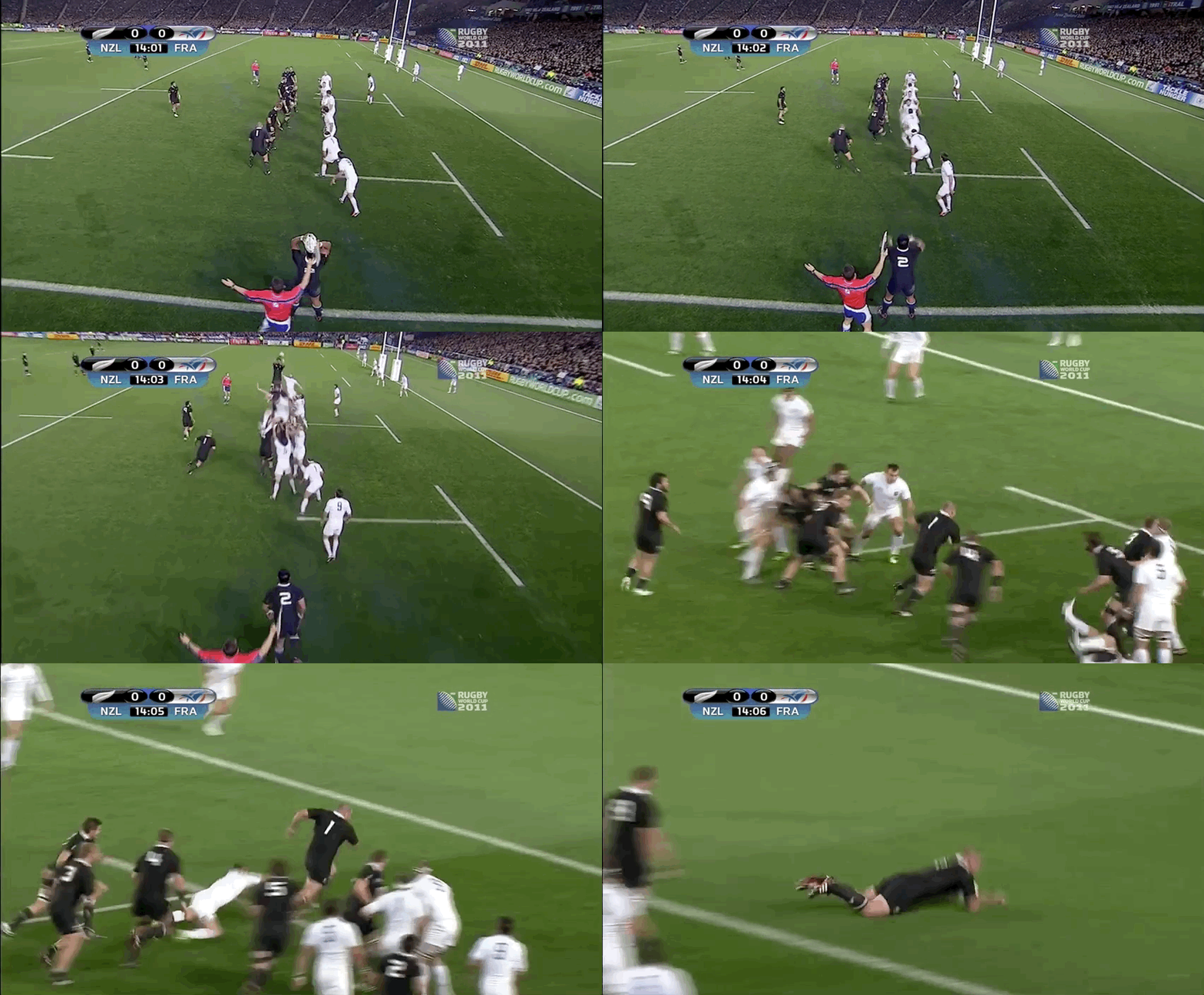
The final lineout try is one at the pinnacle of the game. By looking back at the crucial New Zealand try in the Rugby World Cup 2011 final, we see the importance of Lineout pod interaction and how reacting faster than the opposition can result in simple looking tries. 

New Zealand split the 7 man line out and Woodcock exposes the French defensive structure

This try comes from a simple exploitation of natural weakness. New Zealand have called a 7 man lineout with loosehead, Woodcock acting as the front marker. This leaves a simple two lifting pod structure. The front pod contains New Zealand’s 4, 5 and 8. The pod moves forward to open the hole. This causes their French counterparts to try challenging further ahead of the ball. This means New Zealand are able to act as physical blockers. This stops France reacting and getting close enough to stop Woodcock scoring. 

While the front pod plays a crucial role in preventing the French reacting, the back pod instead acts as the target. It also plays the important role in creating a picture. France defended with the Dusatoir, openside flanker operating as a tail gunner. This means he is aiming to shut off the backline move and act as protection for the French fly half. As soon as the ball is thrown in, Dusatoir reflects Weepu, the All Blacks scrum half. As weepu moves on an outward line, it drags Dusatoir outside the lineout and away from the hole Woodcock attacks. 

This movement of Dusatoir, would normally be covered by the french Number 8 acting as the joint within the lineout. However New Zealand 8 steps across having executed his dummy lift. This prevents the natural drag of the French lineout and maintains the hole through which Woodcock can run through. 

This try then shows the beauty of exploiting an opposition set up. With Dusatoir being used as a tail gunner, rather than in a traditional covering role it allows New Zealand to strike through the split. It also shows the importance of execution. Woodcock moves early, and crucially beats his opposite number. Then having beaten the French loosehead, Woodcock is able to accelerate onto the ball while also changing his line to beat the sprawling French hooker. 

In the three examples above we see there are many ways to see rugby’s most plentiful platform. In the first, we saw a simple back loop that relied on speed and deliberate action to “beat the fold”. This created the opportunity by preventing any meaningful defensive action. In the second we saw how doubt can be easily created and how multiple moving parts create scoring opportunities. The execution of a screen line is important in causing doubt, while the strong carry on the loop shattered the defence. The third try, may seem simplistic in execution but it shows how important manipulation is. By dragging Dusatoir out, and playing off natural movement New Zealand were able to attack a self created hole. The blocking which created the hole is simple, but key in creating and protecting the opportunity.

Organised chaos, striking from turnover

As this barren period of rugby continues, it is important to continue to learn and develop. So while the Barbarians with little preparation time may not seem the best team to learn tactical developments from. Looking back to their game against the Springboks in 2016 provides some real insight into turnover attack. This aspect of rugby is the perfect blend of order and chaos, as such playing perfectly to the Barbarians strengths.

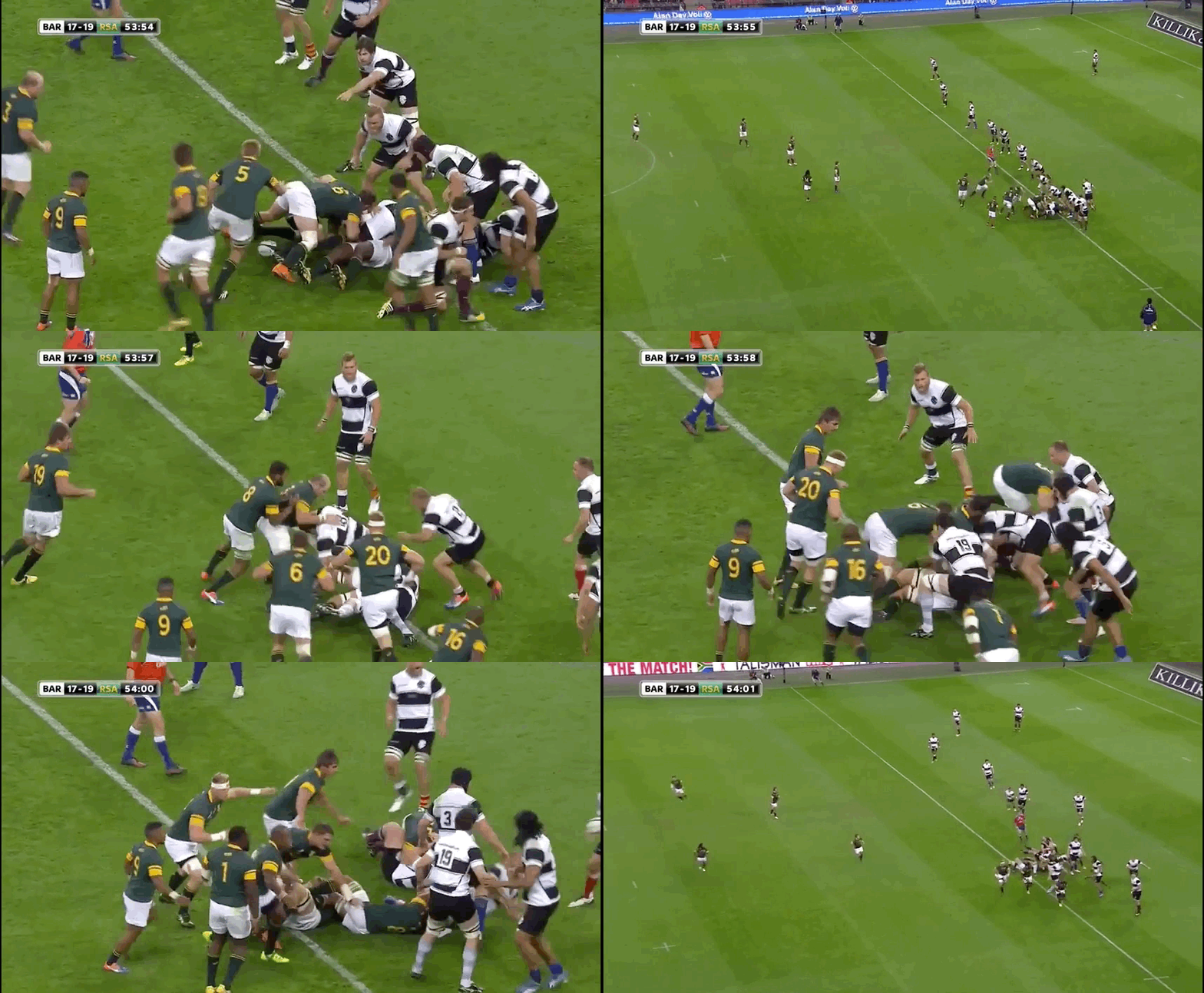
In this blog we will examine both of Luke Moharan’s tries, which profited from the disorganised South African defence. The first one came in the 54th minute of the entertaining match with a steal from Akker van der Merwe.

South Africa pick and go but Akker van der Merwe gets a turnover

When South Africa pick and go around the corner, there are three key defenders involved. The tackle is important with number 18 Toby Smith’s role in taking out the supporting latcher and pulling him around the ball rather than over it allows Akker the second he needs to steal the ball. Akker, the second key player is clearly the quickest thinking player with four or five springboks milling about whilst he rips the ball free. The final key player is Andy Ellis, the scrum half. Having played a role in disrupting the previous ruck he is seen returning to the line. However, once he sees the turnover is won he drops immediately to give himself space and allow the barbarians to spark.

Naiyaravoro and Ellis combine outside to create opportunity

From the turnover they manage to spread the ball. Taqele Naiyaravoro manages to break and back makes ground deep in the SA half. He then experiments in typical Barbarians fashion. Tossing the ball inside as he is tackled it means Ellis can continue the attack. Ellis has the advantage, coming against a broken South African defence. Lambie is easily beaten as he realigns, and Ellis has time to kick and crucially find grass.

Mounga applies immediate pressure with a second line filling in behind

This screenshot taken just prior to the first bounce, shows the key of the second line of defence. South Africa are retreating from a tight phase of attack and have 3 players tight together, with Mounga the only Barbarians representative. Instead the remaining Barbarian have maintained a slight width on their chase. Understanding the need to shut off Ulengo’s angle, the second line of defenders are ready to apply pressure if Mounga fails to gather.

Barbarians second line of defence helps trap Ulengo in a corner

This becomes even clearer once Ulengo has gathered the ball. With the game at Wembley, the ingoal areas are smaller than typical and don’t allow Ulengo as much space to maneuver. Mounga’s pressure and the pincer of the remaining BaaBaa defenders, should all lead to a kick out. However, Ulengo’s kick drifts in field, finding the human wrecking ball, Taqele Naiyaravoro.

From the kick Barbarians spread the ball

While South Africa are able to muster a partial defence it can’t prevent the score. However, this is only brought around because of Naiyaravoro’s actions. Having received the ball nearer the touchline, he arcs towards the posts draws in 2 defenders. The Barbarians continue to attack against the disorgainsided defence with a simple basketball pass to Toby Booth who shows delicate hands to beat Lambie and work with Jordan Taufua to free the outside attackers.

Following this Brad Shields straightens the line. By holding the scrambling defenders he also induces more panic in Springbok ranks. Ruan Combrinck’s misjudged angle allows Moharan a relatively simple finish on the outside. This simple execution of skills takes advantage of the chaos. From missed touch to missed tackles the Barbarians are able to work and score on the South African edge.

However, while Moharan’s first try relied on speed and rapid attack, his second took a simpler and more patient build up. The two contrasting tries provide key messages which can be applied once the rugby returns.

Barbarians kick in behind and then attack the ruck

The Barbarians have been pushed lateral on the previous phase but are intent on building pressure. To do this they slide a simple kick in behind. From here, they attack the ruck and turn the ball over out wide. Seta Tamanivalu plays the key role here. The outside centre initially goes for the ball, and locks on. He is also more central than the South African cleaners who arrive at separate times. This means that Petersen swims past the ball whilst Tamanivalu can absorb the hit from 6, Roelof Smit. This allows a simple, if slow turnover.

Barbarians carry hard drawing but the ball is slow

From the turnover, the Barbarians begin setting a platform. With Michael Fatiolofa angling inwards, it means he draws 2 to South African tacklers. While there is some option for inter pod play, Fatilofa instead carries hard and is held by Carr and the ball is slowed.

Barbarians attack using their fourth option to add width

Again the Barbarians carry off 9. By floating a pass to the fourth carrier it splits the south african defence. By starting opposite a gap, Sam Carter is able to cause the outside defender, Francois Venter, to step in as well as dragging out the two tacklers from their position in the defensive line. This wide carrying off 9 slows down the fold and contacts the Springbok defence.

Andy Ellis snipes and then uses Mounga to strike the hinge defender

In the following phase the ball is quick and South Africa are on the back front with a clear gap forming between the three defenders folding around the corner. Andy Ellis snipes draws the two guard defenders, with Mounga drifting to Pieter-Steph Du Toit’s outside shoulder. This slight loop also draws in Francois Venter. This means that South Africa’s key linking defender has been drawn away from his role.

Barbarians finish outside with simple handling finding the South African edge

This means the Barbarians can attack the width.  They have forced forwards to wrap round, slowing the fold leaving a 3 on 2 in the 15 meter channel. In an effort to shut the ball off Rohan Janse van Rensburg jumps slightly out of line. This means Moharan can cut underneath, beating winger Ulengo with a slight change of line.

So while both tries were scored in much the same way, with simple handling exposing the left edge of the Springboks defence. It is the work prior to the tries that sets them apart. With a barmy and flamboyant style wrapped around the first score, followed by a second score of simple pragmatism and patience. Despite the differences, there is a simple message. By creating order faster than the Springboks, the Barbarians were in constant control. This enables clarity to execute the simple finishes.

NOLA’s forwards exploit New England with wonderful finesse

NOLA and New England share an impressive match in MLR Round 5. Both sides scored some great tries, however NOLA managed to take back the lead with a particularly special effort. While it had more luck than the spectacular offloading of New England’s earlier score, this was a brilliant try working through the phases before finding a weakness and exploiting it.

The try starts from a New England 22m restart. The ball is kicked long and deep, aiming to allow them as much time to organise and pin NOLA back. NOLA receives the ball from the kick off and are immediately using a heavy carrier to disrupt the New England defence. 

NOLA Gold immediately look for contact from New England 22 restart

As New England have come from a restart they are able to maintain a strong line and have 3 compact defenders in the ball carrying channel. This helps them to lock down any attack but it also gives NOLA additional space as this carry has been the focal point for those 3 defenders.

NOLA’s forwards with a nice tip pass to attack a weak shoulder

NOLA then begins to settle into a structure. Initially, they have a pod of 3 forwards off 9. They run a slanted line shape (as opposed to an arrowhead), meaning that a tip is an option and this helps them work round into a gap in the New England defence. By striking this hole, they can easily create momentum. It also has the effect of dragging in the outside New England defenders. 

NOLA striking wide using Cam Dolan

NOLA immediately shows their intent. Here, NOLA has forced New England’s right winger to jump out the line. This play, despite the slightly lower camera angle, also helps us show NOLA using the 1-3-3-1, in part, with Cam Dolan striking in the wide channels. When they play from this width the formation becomes even more evident.

NOLA using the whole pitch to attack with options filling the width

As shown in the diagram above, NOLA are employing a floating 1-3-3-1 system. This is shown by Cam Dolan operating alongside Tongauiha in the wide channels, whilst the tight five have attacked in the middle pitch. Bursic, the blindside flanker, is acting as a floater and connecting player. Again, here NOLA are using flat lines rather than an arrow head. This first pod (3 players on blue line) have positioned yet again so as to expose the third defender from the ruck. By hitting this hinge of the defence, it forces a decision. In this example, it has provoked a slightly split defence. This is the same as above and plays a key role in sparking the final scoring passages.

NOLA hit wide with forwards screening pass options

NOLA then looked to attack wide,  where Bursic’s pass from behind a screen player has enabled a partial drift on the running line. This means that NOLA have successfully isolated a single defender. On this occasion, it is New England’s number 20 who is caught out. NOLA have deliberately struck at this channel. By working at this “13” channel, NOLA have forced a mismatch allowing their own back row to wreak havoc out wide, whilst also guaranteeing space by holding inside defenders with the two screen forwards.

NOLA have a single runner slowing the ball, but good work in tackle results in clean ball

Following this wonderful phase however, NOLA slightly break down. Spreading the ball and constantly looking for an edge has stretched their tight forwards. This is shown by the replacement prop being behind playing and not being in support. Like they did previously, you would expect a pod of forwards for the 9 to use but instead, it is just a solitary runner.

This means New England can stop the runner and attempt a turnover. This phase, then, should produce slower balls. However, the ball presentation is clean and by turning his body in the tackle, the NOLA Gold player has enabled a clean and crisp ball for the scrum half. This fraction of a second enables the scrum half to control the tempo, rather than letting New England wrest control of the attack and force a reset.

NOLA strike off first receiver, blindside flanker Bursic, and create a hole

These small margins then allow a spark, which creates a genuine try scoring opportunity, primarily through the handling ability to the forwards. From the previous phase, the fly half has been used in the ruck, so instead NOLA have organised with Chilean blindside flanker Bursic playing first receiver.

NOLA have multiple options for Bursic as he stands in at first receiver

Bursic, circled in black, is playing a simple role, merely trying to control the defence and manipulate it in preparation for the next phase. Yet again NOLA has a slanted line, however this time it has only a slight gradient so all the options are available. While there is an inside option, the body shape of Bursic shuts it off. 

However, the initial movement has held the defender’s feet. This is integral in creating the offload as it opens a disconnect in the New England line and allows NOLA to flood through.

The offload is created using the structure and NOLA flood through

This offload, another piece of magic by NOLA Golds forwards, is followed by Bursic looping round the corner to be a leading option on the next phase.

Bursic plays key role and is rewarded with the try

Bursic comes round the corner and is again at first receiver. With a second back out wide, he shifts the ball before holding ready to be a leader of another pod, luckily where the ball falls, and exposes a hole expertly opened by the NOLA players escorting the folding New England defence. This means that Bursic plays a line of individuals rather than a coherent (if rushed) scramble.

This try, therefore, shows the effect good ball-handling forwards can have within a structure. By basing their attack around a 1-3-3-1 formation, NOLA have a spread of carrying threats, with Dolan and Tongauiha operating like wrecking balls out wide. But then the slick handling in the middle of the field exploits holes left by New England, whether it was the initial tip pass on the second phase, or Bursic’s strong and commanding cameo at first receiver.

The fine and detailed planning behind the structure of slanted pods and their clear split was also essential in creating this try. By having all these ingredients, NOLA served up yet another brilliant score in an incredibly pulsating match.

Key match stats from Rugbycology reports

Scottish defence hold firms around double tackling and simple system

For obvious reasons, the analysis and punditry of the France v Scotland game focussed on the moment Mohammed Haouas threw away a chance at a possible Grand Slam game against the Irish. However, Scotland showed impressive defensive solidity both before and after the red card to restrict France.

France obviously did manage to score tries even after the red card. After all, it is difficult to keep an on-form team completely silent. However, the Scottish work to restrict the French attack was incredible. To begin with, we are going to look at their defence of a French attack starting from a turnover. 

France turnover Scottish ruck but Scotland recover

France have gained possession after strong counter rucking and look to strike the scottish blindside. However, Scotland are quick to react to France’s sudden possession. The fringe defenders, on the openside apply pressure to Dupont. The blindside defence, however, makes 2 key actions which prevent the French from developing quick ball and a threat. Firstly, Blair Kinghorn instigates action jumping out of the line, turning Vincent inside. The move is bold from Kinghorn but plays on the French line lack of depth. Having just turned it over, Penaud tries to accelerate normally and attack Scotland whilst Vincent is caught close to the line under pressure having been previously defending. This prevents him releasing the ball, and makes him all the more aware of Kinghorn in his eyeline.

The second key action is the double tackle by Scott Cummings and Ali Price. With France trying to attack the blindside but with Vincent’s options closed off, he has to straighten and initially makes a strong carry through Ali Price. With Scott Cummings coming from the inside and going high it could cause problems, but he manages to wrap up and hold Vincent. This slows the French ball, and Cummings is also able to man-handle the french centre and disrupt his ball placement once he has been tackled.

Zander Fagerson chop tackle allows Scottish to challenge the ruck

Skipping ahead a few phases, we see France has worked to an edge. This allows Scotland to push up, only having to worry about the openside. This shows their overall defensive structure close to their own 22. Scotland is operating a 14+1 defensive system not worried about kicks to the chip zone and instead has Ali Price covering in the defensive line, with both wingers high in the line. Scotland has also deliberately positioned their back row in the centre of the defensive line. 

Taking a look at the tackle situation, you can see Scotland’s entire back row supporting 2 Front Rows in the centre of the field. This means they have mobile defenders ready to assist and cover after a line break and also crucially present a jackal threat. 

This threat is increased, with the personnel that Scotland can call upon. Fraser Brown at hooker in this game has covered at Openside flanker on occasion for Scotland. To name a couple versus Russia and against Ireland (from the bench for Hamish Watson), at the 2019 Rugby World Cup. This means that Scotland have 3 effective ball threats, allowing them to target and slow down French ruck speed. This ability was key in helping Scotland prevent the attack from prospering. 

The French attack is incredibly simple and safe, playing just 0.9 passes per phase on average against Scotland’s 1.5. This is incredibly low from showing a tendency to play a narrow game. But it also offers a key insight into how their attack functions. By playing off 9 and regularly keeping it close with pick and goes even from range, we see that they are merely waiting for an opportunity. Slowly driving forward, preparing to strike. This is why the Scottish selection and personnel was so key. Brown, Ritchie and Watson are all jackal threats and as such, they can slow the French down reducing the quick ball the French strike opportunities require. The whole system from Scotland relies on slowing down the attack ball, which worked to great effect against France.

France look fluid but Harris and Johnson prevent Vakatawa being a threat and offloading. This double tackle is key in stopping momentum

Here again, Scotland executes a double tackle aiming to slow down the ball.  This continued tactic resulted in Scotland averaging 1.96 tackles per French ruck (ESPN Match Data). They managed to slow down the ball, crucially in this example prevent an offload. Bouthier runs a tight out to inline hoping that Vakatawa will be able to remain on his feet and offload. However, Harris goes high and wraps the outside centres arms and prevents any chance at an offload.

This French attack ends with a turnover, with very little ground gained. This goes to show the strength of the Scottish defence. By preventing any real opportunity for France, with a relatively simple set up.

Scotland don’t cover the chip zone a possible weakness of their defence going forward.

Skipping ahead to a clip at the start of the second half, on this occasion Scotland started on the back foot. Despite the French not managing to score there are a few faults in the Scottish system from the start. Firstly, they have started with Hogg and Maitland both covering the deep. However, they have also matched France in the lineout with the position of Ali Price in the 5m Channel, covering Antoine Dupont. This means Fraser Brown is covering the chip zone. The Chip Zone in this example is the Zone directly in behind the Scottish defensive line. Fraser Brown (Scotland 2) comes from the tail of the lineout to cover this space, but because he is naturally slower, it opens the opportunity for a chip kick. With the ball bouncing Hogg can’t gather the ball, allowing France to regain and attack with true momentum.

Starting from this situation, however, France doesn’t manage to score from this chaotic regained kick. So the question to ask is how did Scotland bend but not break.

Scotland force France to make their attack in front of them by committing late to the tackle.

The first step of rebuilding the wall is by settling down and preparing. This calmness and composure is normally associated with a firing attack. But here, Scotland calmly settled into defensive formation. This is helped by Jallibert playing out of the tackle zone, meaning Scotland don’t immediately need to commit. Instead after the initial press, they hold their feet ready to cover Jaliberts options.

France look to spread the ball, but Scotland drift and force Penaud to run an arc and burn outside options

Despite being able to settle, Scotalnd are still exposed out wide after a couple of phases. Yet again the actions of the winger, on this occasion Sean Maitland, prevents a true scoring opportunity. Maitland shoots up and gets in the vision of the French second receiver playing behind a screen. Maitland forces the short conservative ball and this means France begin to play diagonally burning the space for their numbers and are unable to utilise a major overlap. The Scottish defence also pressures the French with an early press in the midfield before holding their feet and allowing Jalibet to use his options and drifting pushing Penaud on an angle. 

This is an example of a “soft” drift with Scotland conceding ground in order to cover the additional options. This proves key and creates an opportunity to challenge the French ruck. As Harris rolls with the tackle and to the blindside. This means that Hogg can shift back and limit the decision-making process. The effect being that Jamie Ritchie can attack the ball and just disrupt the French flow.

France run a wider pod but Scotland double tackle stops them

Jumping ahead in the play, France has developed a real opportunity. They’ve busted into the Scottish 22, and have begun to run wider pods who are latching and are driving toward the Scottish line. Still, Scotland is able to deploy its key strategy and eventually win a turnover.

Scotland again use a supporting double tackler. Like Cummings earlier, Hamish Watson offers support to the smaller Ali Price in the tackle. By tackling from the side it helps negate the effect of the latch and pulls down the pair of French runners. Importantly, it also allows an easy fold for the Scottish tight forwards. As despite heading backwards, they don’t have to concentrate on the ruck instead they are able to bounce around and fill the guard.

To win the turnover, Watson is yet again used. The importance of the Scottish back row can’t be overstated. So let us examine this final ruck which prevents France from busting the Scottish line.

Scotland use double tackle to stop Dupont and allow Watson jackal

Yet again this is a double tackle with both Sutherland and Fagerson, hitting Dupont. However, it’s their actions after the tackle which enables Watson to pilfer the ball. The Scottish pair begin by painting a positive image to the referee, Paul Williams.

Sutherland immediately gets to his feet and moves against the grain without looking at Williams. By painting this image, of normal action Sutherland has 2 effects. Firstly when he stands up he tilts Olivon off balance. But as Paul Williams deems this natural movement it warrants no further look. Secondly, it gives Zander Fagerson additional time to move. When Fagerson does roll out the way it prevents the emergency clearers from being effective. Francois Cros (France 6)clearly stops his feet, while Willemse (France 5) has to shift angle and can’t explode into the ruck due to the combined efforts of Sutherland and Fagerson. 

The key to this positive image is that it allows Watson time to jackal and win the turnover. By preventing effective clears at the same time Scotland has managed to survive. Showing how they managed to bend but not break under French pressure.

Overall, Scotland’s defensive efforts were a clear reason for their victory over Les Bleus. Whilst the red card opened up French defences later and allowed Scotland to score points. Even against the full complement, Scotland stayed in the fight with their use of their flankers and hybrid hooker providing a pressure release valve. The double tackle clearly played a massive role in preventing the French developing any real momentum. It was their main combatant to the French use of pods and close play and enabled them to cause mistakes, and prevent the french momentum developing.

Quick share stat reports from Six Nations project.
Get in contact, if you’d like to help collect data on various leagues, events and tournaments and access to the growing database

NOLA fall just short but structure creates first try

Yet again the MLR didn’t fail to disappoint with a great game between NOLA Gold and San Diego Legion on which the rugby family could feast. Yet again the first try of the game provided a wonderful look at the structure used to create a score, with NOLA going through a high number of phases before winning a penalty and crashing over from the resulting lineout.

The main attack starts from a Lineout, coming from a reversed penalty. This means that the attack has the full width to attack. The Gold starts with a 5 man lineout. By starting with a preset pod at the front it concentrates the San Diego Legion competition at the front.

NOLA call 5 man line out on halfway to begin strike phase.

From here the gold forwards enter a spread formation, what shows is the speed of the spread. The set up has confused the Legion as they are left pulling in a man late. This contracts the Legion line and limits the mobility. This allows NOLA to hit the back pod relatively unchallenged setting a perfect platform for the attack.

NOLA hit a pod of the 10 to begin the phase with multiple options for carrier

The Gold’s first phase runs a striking play targeting the centre of the field. When attacking off a lineout, teams have 3 options to run at the seam between the lineout and the defensive line, the 10-12 midfield channel, or by trying to focus the outside centre. In this case, NOLA has aimed to attack the centre of the field to enable them to split the San Diego defence. These following phases from the Gold repeatedly aim to target the 15m channel and the edge of the Legion defence. By setting in the midfield, NOLA is forcing a decision to make with the hope of an edge or gap being created.

NOLA work to the width using quick ruck ball generate by the pod

As shown in the clip there is a clear desire to play to the width. By using their 1-3-3-1 (something I’ll come to later), NOLA is stretching the Legion side and dragging the defence, as well as forcing a change in backfield coverage with the winger stepping in to cover the space.

This wide strike against a slightly disorganised defence allows a dominant carry. By playing a carry off the 10 yet again it holds the Legion defence whilst also making run timing considerably easier. In this case, Legion press towards the 10, and then turn their shoulders meaning any tackle will be less strong merely because it’s side on the attacker’s momentum should drive them through the tackle.

However, the key for NOLA here is the end of the clip and the transition from a striking play to structure. As alluded to earlier, NOLA plays a 1-3-3-1 structure with their forwards. This is a traditional formation in rugby, with the forwards forming this shape during long phases of play. With two of the back rower’s occupying the wide channels with the tight forwards occupying the centrefield.

NOLA attack with a 1-3-3-1 formation, with 10 sat behind forward carrying pod

As shown in the still image above, this is the NOLA version of the 1-3-3-1 structure. The Fly Half circled in red, sits behind the first pod of 3, with the second pod of 3 currently being assembled along with supporting back in behind, as a possible option. The point of this is to allow multiple options whilst allowing a simple structure which can be tweaked and adapted.

However, sadly for NOLA the attacks did breakdown slightly. On the phase from the still, they were subject to physical Legion defence and had to work to reset their shape and gather momentum. This is a key point in the attack as often teams may lose their way, but in this case, NOLA reset effectively and can soon begin to stretch the Legion out wide again, despite 3 stagnant phases.

NOLA look to reset and use this phase to draw in final legion defenders.

This reset begins with an attack of 9 using two of the original pod of 3 whilst, the third rejoins from the ruck later on. As you see on the wide-angle just before the scrum halve’s pass, the Legion defence is travelling backwards ever so slightly from the previous pass and are forced to assess their spacings during this reset phase.

NOLA strike a pod off 10 beating Nonu in contact and winning quick ball

Whilst the Legion defence was having to tighten and then contract again, the NOLA gold attack was applying the finishing touches to their next strike. The Gold might get driven backwards but the similarities to the strike phase off the original lineout which began the move are difficult to ignore. The play centres on a pod of 3 with a back looping round the back as a fade option, with the pod fixing the 10-12 channel. This points to a strategic decision to target Ma’a Nonu’s channel. Off the original strike phase, he makes a hit on one of the supporting pod players, whilst here Nonu is forced to change his angle and make a hit on the outside pod runner. By doing this, NOLA can make momentum through the tackle. 

NOLA have quick ball and use simple hands to use their single forward outside before simple offload exposes Legion again

The effect of the momentum is clearest on the following phase, Nonu is forced to step in to guard whilst Gold has set up with their final forward being used out wide to expose the Legion. 

The offload is an extra little addition for the Gold, as it allows two advantages. Primarily it leads to the extra ground being gained, a clear and obvious advantage especially against a broken defence as they have to stop a second quick blow.

Secondly, the attack out wide has used the final forward, but by the forward offloading, he is then able to help secure the ruck and prevent any attempt of a counter ruck from the Legion. These little spots and individual decisions create the conditions in which a structure can succeed.

Following this phase, NOLA strikes back on the inside, again using the 1-3-3-1 structure. Firstly they play off 9 with a lovely tip on pass helping to force a one on one tackle and allow NOLA to keep the momentum flowing. Then the Gold plays off the 10 strikings slightly wider against a retreating defence before winning a crucial penalty for offside, a clear sign of the stress on the Legion defence.

The penalty is then kicked to the corner, and NOLA has a lineout 5m out. From where we can see the amount of skill that finishes an already incredible passage of play. The lineout called by NOLA is a 6+1 lineout with the number 8 in scrum-half position, a clear indication of a maul.

NOLA call 6+1 Lineout and look set to maul

The Gold has set up with a middle pod, with a lifter at the front with the remnants of a pod ready to strike from the tail. This means that Legion has marked up man for man, but clearly, it is another clear indication of movement.

NOLA Lineout hits front pod before “+1” wraps round front to score

With all these clear indications of a coming maul, NOLA has set the perfect trap to ensnare the Legion. The first movement with a bounce out at the front means that the legion movement is forced to stop, and they are kept on the back front. It also takes perfect advantage of NOLA’s 6+1 call. The Gold’s extra forward at scrum-half can immediately step in to replace the bounced player and latch onto the ball. 

But while the speed is key, the more important aspect is the direction at which he joins. As he can only bind and receive the ball once NOLA hit the ground he is automatically travelling the same way as the Legion drive. Legion has tried to pile force through the rear lifter and the jumper, aiming to tilt the maul and drive it towards the touchline. However, as the lifter and jumper know the front peel is coming, they can merely loosen their bind and act passively, meaning the Legions force spins the maul away rather than creating a directional push.

NOLA front peel delivers first score

The final key aspect of try is the front of the maul, sadly obscured from the camera. As NOLA pivots with Legions force, they shear the maul to the blinds side and attack the seam between the front marker (now in Legions drive) and the Legions front defender. This allows a free run to the try line, and the number 4 second row from Legion is unable to identify the threat and as such prevent any challenge on the line.

This try from NOLA then is built primarily on structure and game control. The structure being fed from coach, Nate Osborne, based around the aforementioned 1-3-3-1 formation creates momentum and allows comfort creating momentum. Secondly, the game control within this structure is exquisite with everyone knowing their role. The stagnant phases do occur but the ability to reset and then exploit opportunities shows a real maturity and on-field assessment aspect to the attack. Finally, in the maul, they show great cohesion, again based around structure and anticipation with everything falling into a neat package as NOLA struck first against the San Diego Legion. 

Sadly it wasn’t enough and Legion eventually showed more coolness and fought back with the higher conversion rate. However, the ratings overall did favour NOLA with an especially strong defence. So we should continue to see strong showings from the Gold. Legion did march on, however, and whilst they struggled initially it was a mark of pedigree that kept the Western conferences unbeaten start on the track.

Rugbycology stats produced as part of study into MLR
To get involved contact me: Sportanalysisworld@gmail.com or message me wherever you saw this post

Simple structure allows France to create their own luck

France away at Wales, was a classic game, with tension and strong scores. It shows the development of Pivac’s game plan is still very much in the beta phase, however whilst the welsh side failed to fire, France created and took opportunities.

The key part of any attack is how it starts. Without a beginning it’s very difficult to set a structure and as a result see the brilliant minds of an attack coach at work. In this case, we start with a France kick off having just gone 3 points down to a Biggar penalty.

France kick off target’s Biggar

France kicked off long, a common strategy with the aim of pinning back of an opponent. France however, has a specific strategy from this kick off. As is normal Wales, have a specific formation for their pods and players depending on French alignment, this means that every player knows the position of the other and the drill is repeatable and efficient. However, France have also planned for this.

To combat a simple kick to touch, Ntamack kicks it with a deliberate hang time. The key is the balls target rather than just an initial tackle. By targeting Dan Biggar, it means that he will be forced to take contact and removes a key kicker for Wales. This effect is then rounded off with the use of 3 backs focussed on Biggar. Dupont runs and leads the line on the right shoulder of Biggar, cutting off his outside passing options, whilst Vincent targets Biggar directly.

This initial positioning from France is key in dictating the game to Wales and allowing France to control the next passages of play. They then target Biggar again on the third phase, with Dupont playing in a similar role to Gareth Davies under Edwards and focus blitzing on Biggar at first receiver.

Dupont applies incredible pressure forcing Biggar to carry and stopping a simple Welsh exit.

The quick line speed is enough to dissuade Biggar from risking a kick or the pass. France’s clarity has a clear effect and by forcing Dan Biggar to contact, they’ve removed the Fly Half as a kicking threat on 2 of the 3 phases, an effect exacerbated given that the second phase took on a positional role rather than being a major attack or progression threat.

Gareth Davies kicks targeting the 15m Channel
Alldrit carries drawing in four Welsh defenders

Wales do eventually clear with Gareth Davies, the box kick landing just on the edge of the 15m. This means that Wales have an easier role of defending the entire pitch however, Alldritt wraps around and crashes the ball straight in to the Wales line. The French 8 targets the space between two welsh defenders forcing a double tackle aiming to contact the line.

Following this double tackle, Wales then make a clear decision and begin targetting the ruck. This drags in 4 players (the double tackle and 2 ruck challengers), automatically tightening the defence. This causes a problem on the next phase as Faletau has to step across to the guard position and ends up slightly behind the ruck before having to realign.

France strike to the blindside finding space on the Welsh wing.

As such France can then target and exploit the Welsh blindside flank with North outside 2 tight 5 forwards. The space is then wonderfully exploited by the French who strike wide with Bouthier playing a key role at first receiver.

Firstly, Francois Cros, helps focus the inside welsh defenders allowing Bouthier to fade round and target the inside shoulder of AWJ and pass directly to Fickou out wide who burns North and allows Vincent to get a touch on the inside from a simple offload.

The simplicity will of course worry Wales in how they were exposed, but the French should equally be as pleased with how they created the opportunity. A simple structure built to expose the edge with a deep runner and then the hard work on the inside to create an opportunity.

France use a simple 3 man pod of Bouthier acting as second scrum half.

This work is no more clearly exemplified than in Bouthier. The full back arrives and plays from Scrum Half allowing Du Pont to hover toward the next ruck as France begin to set a structure. This fluidity of roles and not forcing everything from a designated player allows France to keep Wales moving backward and simply allows the French to settle.

Playing the time forward, France begin to really set the sturucutre and work side to side with the ball. By trying to find the dege it allows gaps to appear in the centre of the defence and holes to be exposed when they cut back.

France again try and stretch Wales with Wales stretched but not broken

By running a simple double layer of attack with forwards offering screens and additional passing options to Fickou. France are able to create a focus point, where Wales are adopting a use a double tackle focusing on shutting the ball off from exposing the wide channel. Josh Adams having to rush up to well inside the 15m tramlines to shut off the move.

France make a strong carry but poor positioning on the floor allows simple turnover for Wales to attack from.

However, France then switched direction rather than working to the width with a simple one pass strategy becoming clear. However this leaves Le Roux exposed as while he breaks the first tackle, the ball ends facing towards Faletau  rather than his supporting players. This enables Faletau to win a turnover.

France rush with Ntamack making a spot tackle on Biggar and shutting down the welsh blindside attack

France are forced into scramble mode but show their intent immediately. Rather than allowing Pivac’s favoured two pass from turnover, Ntmack shoots from his position on the wing focusing on the man and ball tackle. This all comes from being able to slow down the ball at the previous ruck.

Pivacs favoured 2 pass strategery requires quick ball to work aiming to find the exposed edge of a defence. But instead, Wales are slowed and France have been able to drop back a number of key players while remaining defensive integrity.

Alldritt runs deliberately pulling the welsh defence across with an arc toward the touchline

This time when Alldritt receives the ball he arcs his run, bending first out and then in back towards the 15m channel. Whilst this might seem like allowing an easier defence of a full field. It instead serves to create a one on one tackle that Alldritt can dominate as he aims to create momentum from France who have players returning from the previous passage of play.

This all serves to set a platform with the next attack with France’s players reforming quickly into 3 distinct sections. The majority of the backs including Thomas and Vakatawa are able to hover out wide. Then the forwards returning are either formed into the attack structure whilst others angle into the breakdown.

Yet again France attack with a pod of 3 on the second phase to focus Welsh defence.

The attack structure is a simple pod of 3 off Dupont, with France having to commit a high number of players to the previous ruck. In response Wales rush up with a double tackle from Ken Owens and Alun Wyn Jones focusing on the ball. However, this leads to a tackle with high body heights allowing Le Roux and Haouascan to drive drive through and split the tackle and push Willemse through the contact, forcing Wales to take a step back whilst also preventing an easier fold.

France kick and exploit a welsh error in forming blockers.

France then struck from this relatively simple set up. With Wales having a numerical advantage (in the competition area around the kick) it should be an easy win for the Welsh. But they tighten their blocking V formation with Adams drifting to shut the door on whilst leaving Thomas a free angle to challenge. Thomas, then despite being lower turns his body and able to just disrupt the ball, literally making France’s ‘luck’.

In truth then while Bouthier’s try seems to come from a simple welsh error, it instead comes from a simple exploitation of space built off the use of a simplified structure exposing Welsh weaknesses.

Firstly, the French kick off removes Biggar as a kicking threat. This dictation of play is effective and stops Wales defaulting and settling after a score. Following this Alldritt turns the screw by dragging the defensive wall and opening a wider blindside.

Wales of course are not entirely absolved from blame targeting the ball and allowing France to drift wider. But the French of Bouthier to create and then crucially exploit an opportunity is key. And while the play does break down it’s clear France are building pressure.

Then from the turnover France believe in their work rate and rely on the speed and defence to expose Wales. This ratcheting I’d pressure creates the perfect conditions for a poor kick and as such allows France a solid base to attack from.

Then France settle immediately with a simple structure before realising the ball id slower than ideal and target space not bodies in an attempt to gain momentum. The Welsh escorts obviously make a mistake in allowing Thomas to challenge.

But this try isn’t about an error strewn team in red but an effective simple Les Bleus. Who created and then converted the opportunity.

Key stats from the Stat Reports produced for the game

Found here
https://drive.google.com/drive/folders/1vk0arGI4czV5JEKWEbhC4xyrq0z2CAfq?usp=sharing
Continue reading “Simple structure allows France to create their own luck”

Building blocks deliver Arrows victory

As the MLR descended on Vegas we were all entertained with a light bending, colourful display of rugby, as the Toronto Arrows took on the Houston Sabercats. In a thrilling game, the Arrows showed clear signs of development and why they’ve been such a success. In three passages of play, they showed an ability to engineer quick ball, escaping a poor set up, and exploiting the defence with ruthless strike plays.

First let us begin at the beginning, the very beginning.

Kicking Off to Houston, Toronto punt the ball long and immediately as is standard procedure among most teams drop players back to cover a return kick. This leads to the ball coming back directly to the Arrows. The key here though is not built on the prediction of the Sabercats return policy, but instead their immediate action. Once the ball is received they shift the ball twice and attack from the centre of the field. The effect of this is two fold, firstly the returning arrows can arc their runs inside to a preset location. Then following this they have a midfield platform to set their shape.

Arrows have just kicked off and receive return fire from the Sabercats

The Arrows beginning placing the bricks in the wall, with a pod off the immediate ruck. This might seem to be a relatively quick phase but live, the arrows set the pod slowly making sure they were ready to attack and getting as many players on their feet and in position as possible.

From this first carry the Arrows attack with a simple pod of 3

Having set the midfield platform from the kick initially, now the arrows begin to gather momentum striking at the fringes of the Sabercats defence.  Whilst this phase is taking place it allows the arrows previous pod to set with a 1-3-3-1 apparently being set ready to attack from this incredibly wide position.

Arrows working to an edge to stretch Sabercats

As a quick aside, i’m going to explain the 1-3-3-1 structure. Whilst attacking formattions are often commonly seen in American Football, in terms of plays, and Football, in the more applicable 4-4-2, in Rugby an attacking formation is determined by the position of the forwards. The positions of the forwards is key to determining who hits rucks and where the Fly Half can set his backs and bring in screen plays to exploit the opposition edges.

The Arrows, begin to assemble their attacking structure, a simple 1-3-3-1

In this example Toronto are running a 1-3-3-1 system.  The first part of this is shown in the ruck at the bottom of the screen. With a forward and a back being used to clear the ruck in the wide channels. Secondly, They have two pods of 3 beginning to form. Having reached an edge, the Arrows use one pod of 3 forwards (circled in red) close to the 9, negating a possible rush from the defence as well as setting up a possible blindside and keeping Houston honest. Meanwhile they use a more fluid pod of 3 wider (Yellow Line), the fluidity coming in a future phase. Whilst both these pods are positioned between 9 and 10 (Red Circle) and off the fly half (Yellow Line), there are two key moving pieces that enable the wide strike across the next 2 phases.

In the green square, the Arrows flanker can shift wider and offer a carrying threat as well as playing an easy ruck clearance role on the next set of attacks. Whilst the centre (blue hexagon) can shift and position himself as a screened option and as such allow yet more width for the arrows.

Playing the clips on, we see a significant role played by each of the 4 parts outlined, starting with clean ball given by the first 1, this time the openside flanker at the ruck closest to the screen.

The first pod of 3 carry pushing the Sabercats back.

The first pod (the one circled in red above) strike just outside the 15m. This pulls the arrows wider, but also means that the Sabercats are left realigning whilst the Arrows have been able to generate quick ball. This effect is exacerbated by how the Sabercats have been defending in contrast to the arrows attack structure. With their backrow tight to the ruck, Houston are left with their Openside making a tackle whilst 6 is left defending guard on the blindside with 8 still finding his space when the Arrows 9 arrives.

The Arrows spread the play using their structure to exploit the Sabercats

The arrows then find space out wide with some brilliant work. Attacking the hinge of the Sabercats defence and exposing a slight mismatch to great effect. This comes from a series of correct connections against an imperfect defensive system set up.

To begin with let’s examine the very basic parts of the structure before these connections start truly firing, as the Scrum Half picks up the ball.

The 2 pods of 3 work to create the opportunity outside, both with screens and ruck play

From the start two things standout. The initial pod of 3 from the 1-3-3-1 structure has broken slightly with the front runner coming as an option of 9 with the back runners, in a holding pattern off the Fly Half offering a slight screen.  As well as this from the previous carry, the Arrows have managed to fracture the Sabercats defence. With the first clearer going well beyond the ball, and pushing the Houston Sabercat fold further around. This stops a meaningful fold and allows dummy runs to be more effective, as the Sabercats don’t feel as secure in their drift worried due to a crumple effect along the line. This minute details create the opportunity when we play the attack on.

Once the Arrows reach the hinge of the Sabercats, they still have various options

The crumple effect has now become clearer, as well as this, strong movements from the pod have created a clear disconnect. As the arrows attack out wide they maintain the multiple options approach to isolate further the winger (red circle) who has become separated from the line. The Arrows attack line is curved with a flat and deep option preventing a simple spot tackle from the winger and forcing him to hold his decision till he has more support. The phase then ends as shown in the gif above with a strong carry by the openside flanker. 

The Arrows quickly work back into their structure, and begin working in the Sabercats half

As is typical of the Arrows, they then continue to attack reset into their structure. With the inside centre round the back offering options the arrows play flat and win the collision aiming to stretch the Sabercats and begin to force errors.  You can already see the structure beginning to take shape after the break which is a good sign for a settled team like the arrows, having played off 9, then the phase above before using the blindside flanker out wide. 

Arrows continue working to an edge, and earn a penalty from an overly aggressive Houston defence

Whilst however, the following attacks are largely nullified it is a direct show of the importance of structure in breaking down the all the more professional and effective defences. However this is not to say this burst of structure fails to yield anything. The arrows walk away with a quick and easy 3 points drawn from this initial foray. Highly impressive efficiency from the boys in blue.

Overall, it was an incredibly impressive and exciting game. The Arrows began with intensity and speed that was incredibly remarkable before the Sabercats brought the game right down to the wire. It was the arrows who had just slightly too much and walked away with victory by the skin of their teeth.

Design a site like this with WordPress.com
Get started