
Munster and Benetton are the two most effective defensive sides in the URC this season, with both conceding under 125 points in the URC this season. This miserly tally is built on consistency, with neither side conceding over 30 points in a single United Rugby Championship game this season. While these facts alone make them interesting sides to learn from, how both sides defend is perhaps even with two differing styles achieving similar outcomes.
We can see this difference incredibly clearly in this dendrogram, which plots the different defensive statistical clusters of the United Rugby Championship using data from Oval. These clusters aim to give an idea of what a team is doing on defence rather than how effective they are. Showing Munster has similar traits to provincial rivals Leinster while Benetton is grouped with Zebre – perhaps a sign of a national style filtering through.
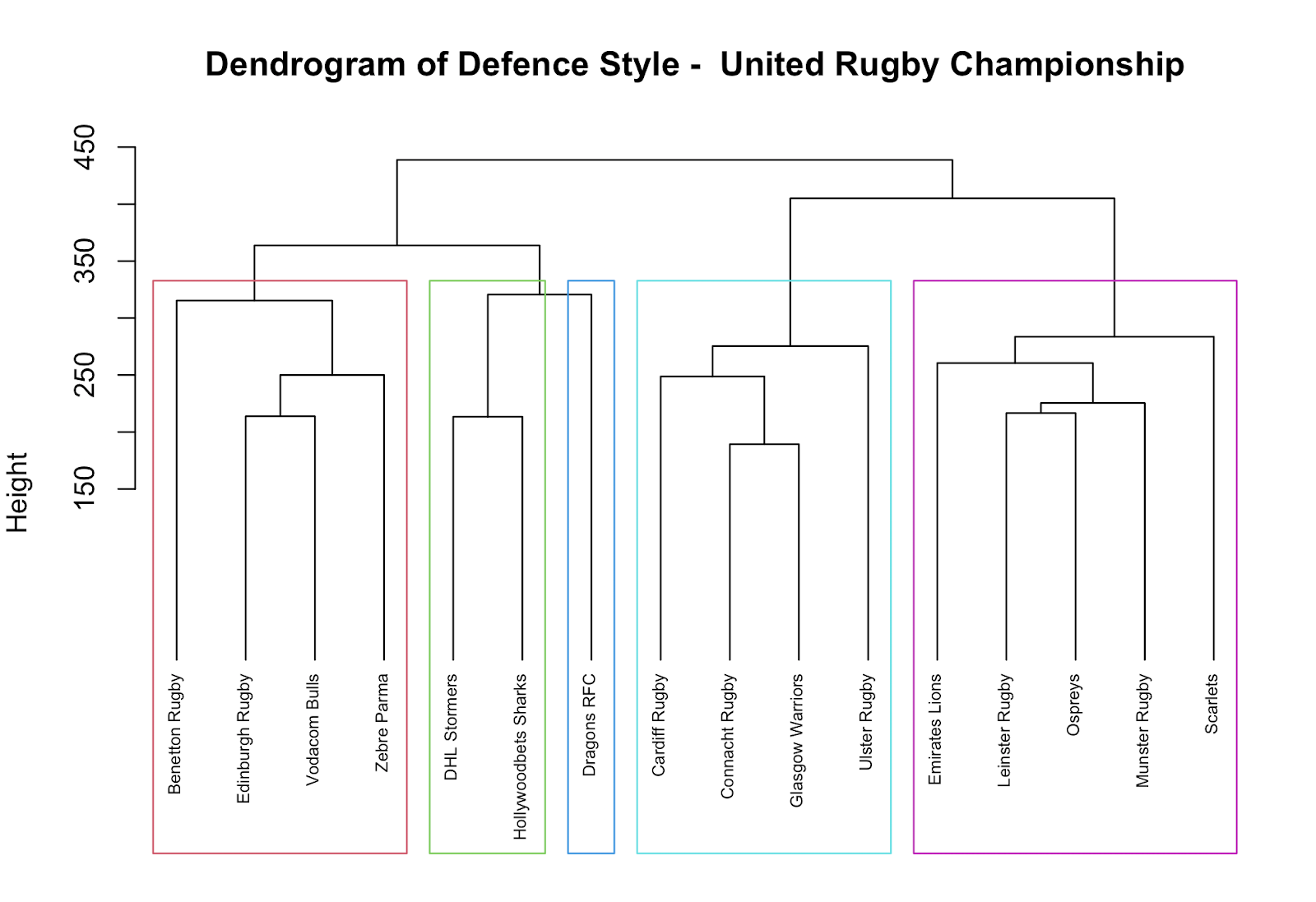
There is a clear difference between the two sides so let us dig into the statistics and understand why.
Munster: Defending with intent
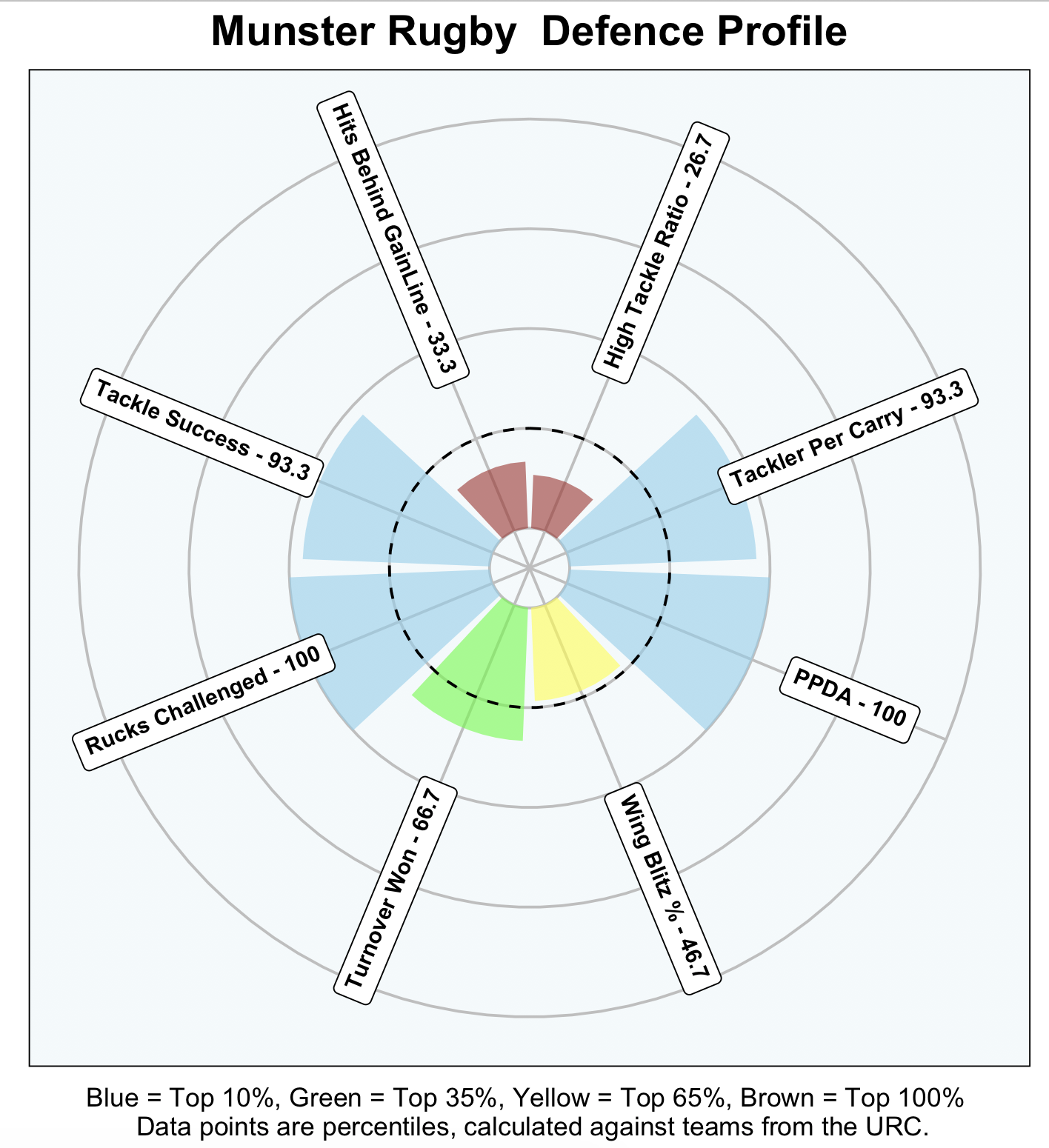
Munster has based their defence on physicality, looking to dominate their opponent in the collision. Their primary method to achieve this is by forcing their opponent to attack tight to the breakdown. We can see this from their PPDA ranking. PPDA (Pass Per Defensive Action) is a metric which measures the amount of passes a defence allows to their opponent before attempting a tackle. Teams which allow fewer passes tend to have a higher line speed closer to the ruck.
We can see their DNA clearly in this passage against Leinster. Defending in the 22 and just before halftime raises Munster’s intensity and encourages Leinster to be a little more conservative to try and build the phases. Initially, Leinster were dominant, with their carries around the corner coming thick and fast. However, bouncing back off the far touchline Munster can apply pressure of their own. A dominant sack tackle by seven John Hodnett behind the gain line stops the attack’s momentum. Before Jean Kleyn, wearing number 4 makes another hit behind the gain line. Leinster then play around the corner again and while a lovely pass from Frawley enables a dominant carry they are stuck where they started and eventually make a mistake which ends the half.
We see a similar pattern against Glasgow. The Warriors initially start on top and can sling the ball to width. However, a strong tackle from Munster’s two-second rowers prevents Glasgow from building on this momentum. The Scottish side do try and find the edge on the next phase, however, they only continue to lose more ground, with Munster’s defence continuing to impose itself. Glasgow in the end is forced to kick back from inside their half after several more negative phases.
What you can also see in the defensive sets above is Munster’s policy at the defensive breakdown. No team in the United Rugby Championship attacks more of their opponent’s rucks than Munster. This buys them time to get their line set making it easier for them to suffocate their opponent’s attack.
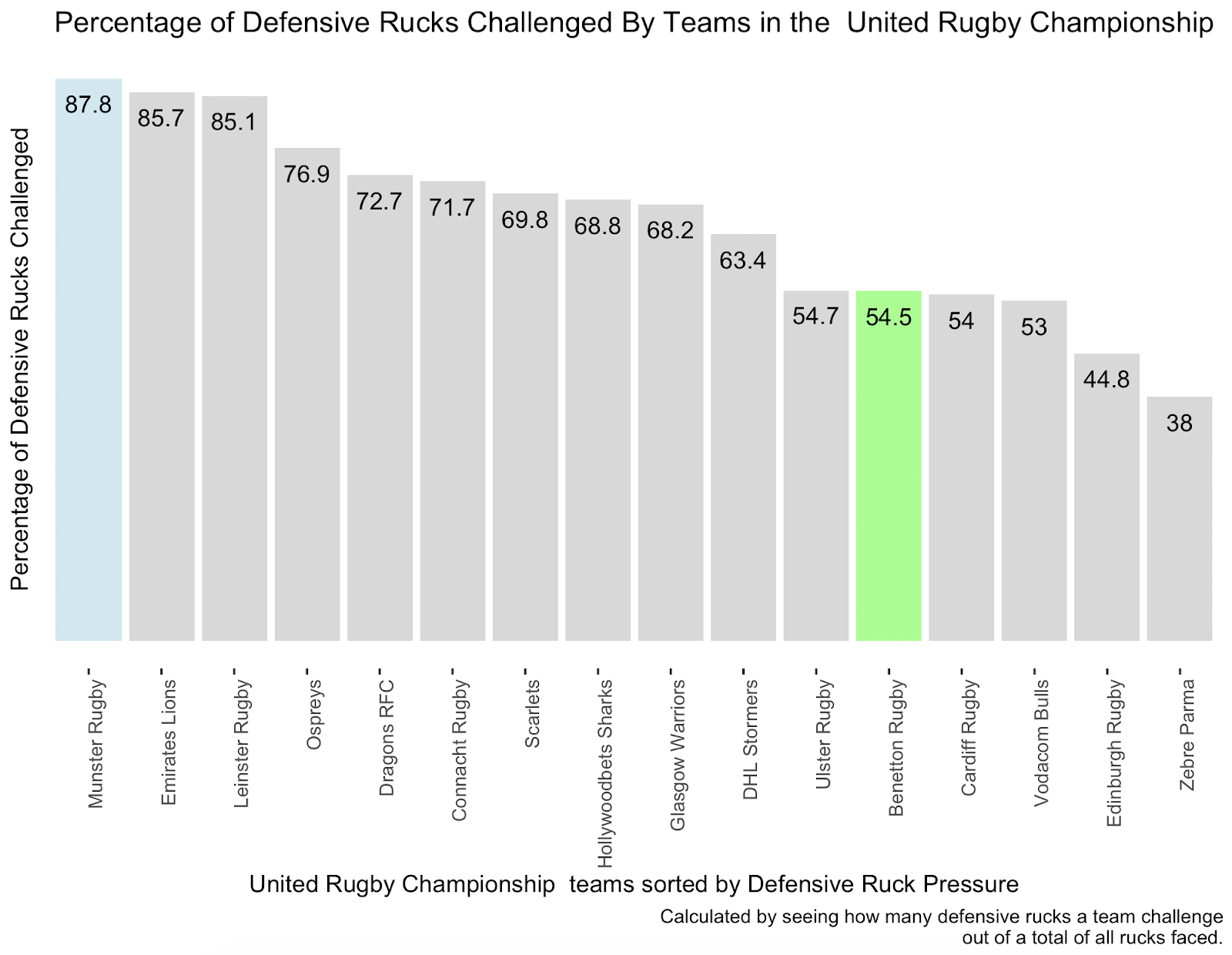
In this clip from their game against Glasgow, we can see how Munster combines both their high line speed and desire to restrict an opponent’s width with a constant attack policy at the breakdown. Firstly we see John Ryan attacking through the ruck slowing the ball, and dragging a Glasgow player to the ground before being called off by the referee. This slows the ball down forcing Glasgow to carry in a brick wall. The Warrior’s second rower tries a tip to avoid the initial pressure but Josh Hodnett is well-connected as the fourth defender and delivers a crushing tackle behind the gain line. Munster then attacked the breakdown again with John Ryan swooping in late to steal the ball.
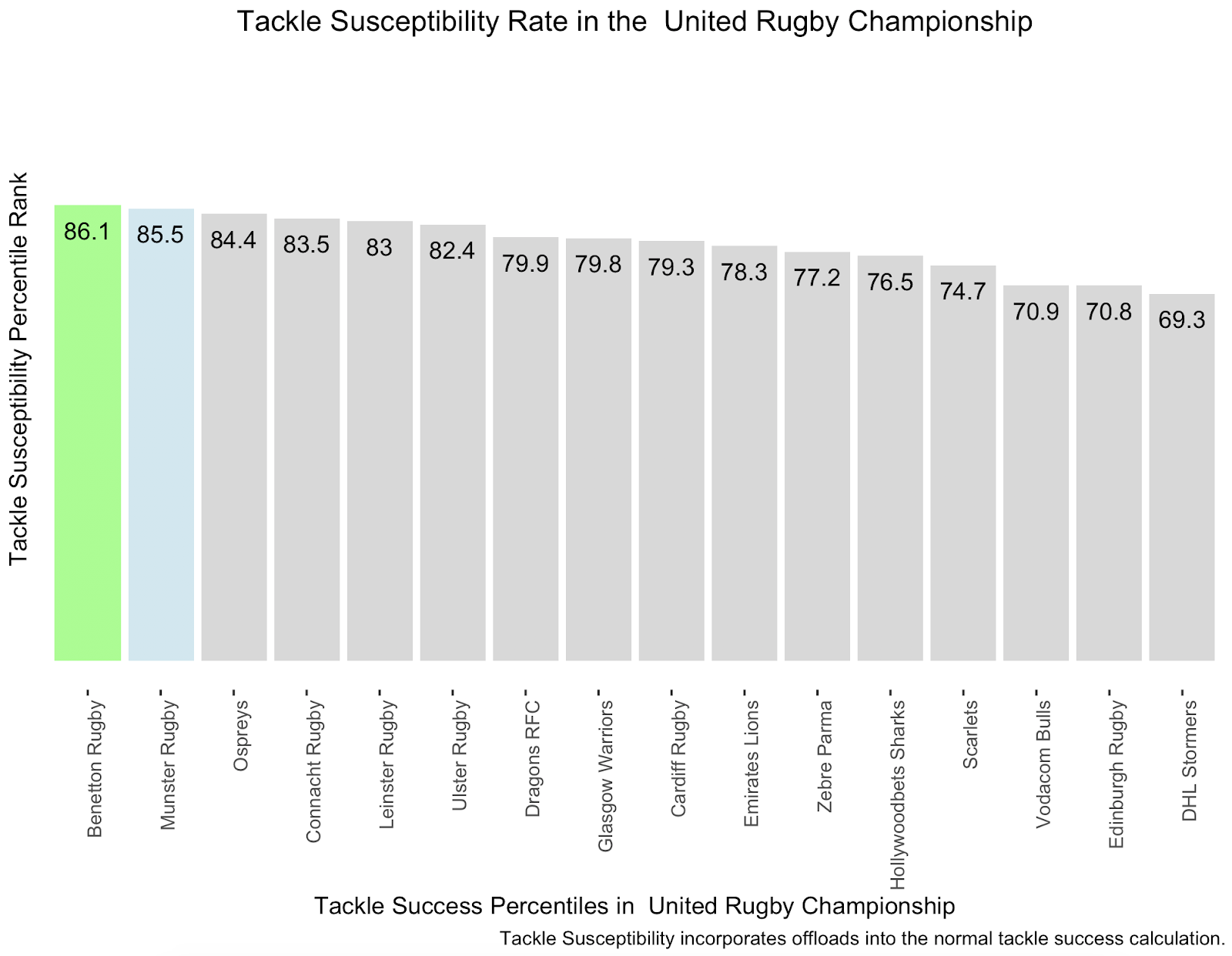
The final element in building their red wall has been the success and style of Munster’s tackling. Under Dennis Leamy, Munster has adopted a primarily two-man tackle system, helped by their ability to restrict the opponent’s width while they also miss the second-fewest tackles in the United Rugby Championship only beaten by Benetton.
Benetton: Flowing like a river
However, it’s not just highly effective tackling that has set Benetton on the road to defensive success. The side from the North of Italy also brings their style of defence which enables them to have the second most effective defence in the United Rugby Championship.

Benetton uses a more zonal defence compared to the rest of the URC, as shown by their PPDA which is lower than 60% of sides and their wing blitz which also sits below average. Part of the reason behind this is that they look to get numbers on feet, as shown by the low rate of breakdown attacks.
We can see this defensive system at work against the Osprey’s in their Challenge Cup clash. Starting from a kick chase the Benetton defence pushes the Welsh region to an edge which allows them to get set and establish a wall of pressure. The tackler Ratave transitions well to disrupt the ruck putting the Italian side on the front foot. However while we may have expected Munster to fire off the line, from the following ruck Benetton trusted their connection with no player going beyond the defensive line. This prevents any soft shoulders being exposed and the Benetton defence can comfortably deal with Ospreys attack. As the attack develops we see how they prioritise a fight within the tackle but don’t commit any additional players settling into a rhythm and just presenting a well connected defensive line.
The defence is based on constant flow and allows them to shut down Edinburgh in the following sequence despite being a man down. Coming off the back of a dominant maul you’d expect Edinburgh to take advantage but the Italians can recover. Not challenging the breakdowns means the ball is quick but their fold is exceptional meaning they can put bodies in front of the carrier. Once the Edinburgh attack has hit the 15 and bounces back the Benetton defence is well prepared and starts driving the Scottish side backward. The final phase almost sees Edinburgh expose the edge but Benetton can apply pressure and the pass goes to the ground.
Ferocity and Flow – two approaches to solving the same problem
The beauty of rugby is in the approach to building a side, there is rarely ever one solution to a problem. In the URC this is incredibly true with the rugby traditions and strategies of five different nations creating a melting pot of styles. These differences are visible within Munster and Benetton’s setups. While Munster bases themselves around hard work and trapping an opponent close to the ruck, Benetton are more patient and force their opponent backwards waiting for a chance to turn the ball over. This is also shown in their attacking characteristics with only Connacht making more carries than Munster while Benetton sit lower than the United Rugby Championship average. Munster are violent and intense immediately in their defensive sets looking to win the ball back early, while the Italian side are happy for others to run into a brick wall. Neither method is right nor wrong, but certainly, both are managing to solve the problems posed to them by URC attacks this season.
 The Analysis Guy