
The World Cup is fast approaching, and it’s time to turn our focus onto the hosts. France enter the tournament as one of the major favourites, and play one of rugby’s most attractive brands of rugby. But to look just at the impressive back line and wide attack is to miss the crushing physicality and pragmatism that enables this France side to enter a home world cup as a legitimate favourite.
Joué Joué: The French Attack Under Galthié
There is perhaps no better place to start when examining how France play than with their charismatic coach Galthie. In this interview given to Nik Simon in the Daily Mail he describes his philosophy and his desire to play with speed. ( Galthie Interview in Daily Mail) This intent was clear on the field with over 30% of French rucks in the Six Nations completed in under 2 seconds, the most in the competition.
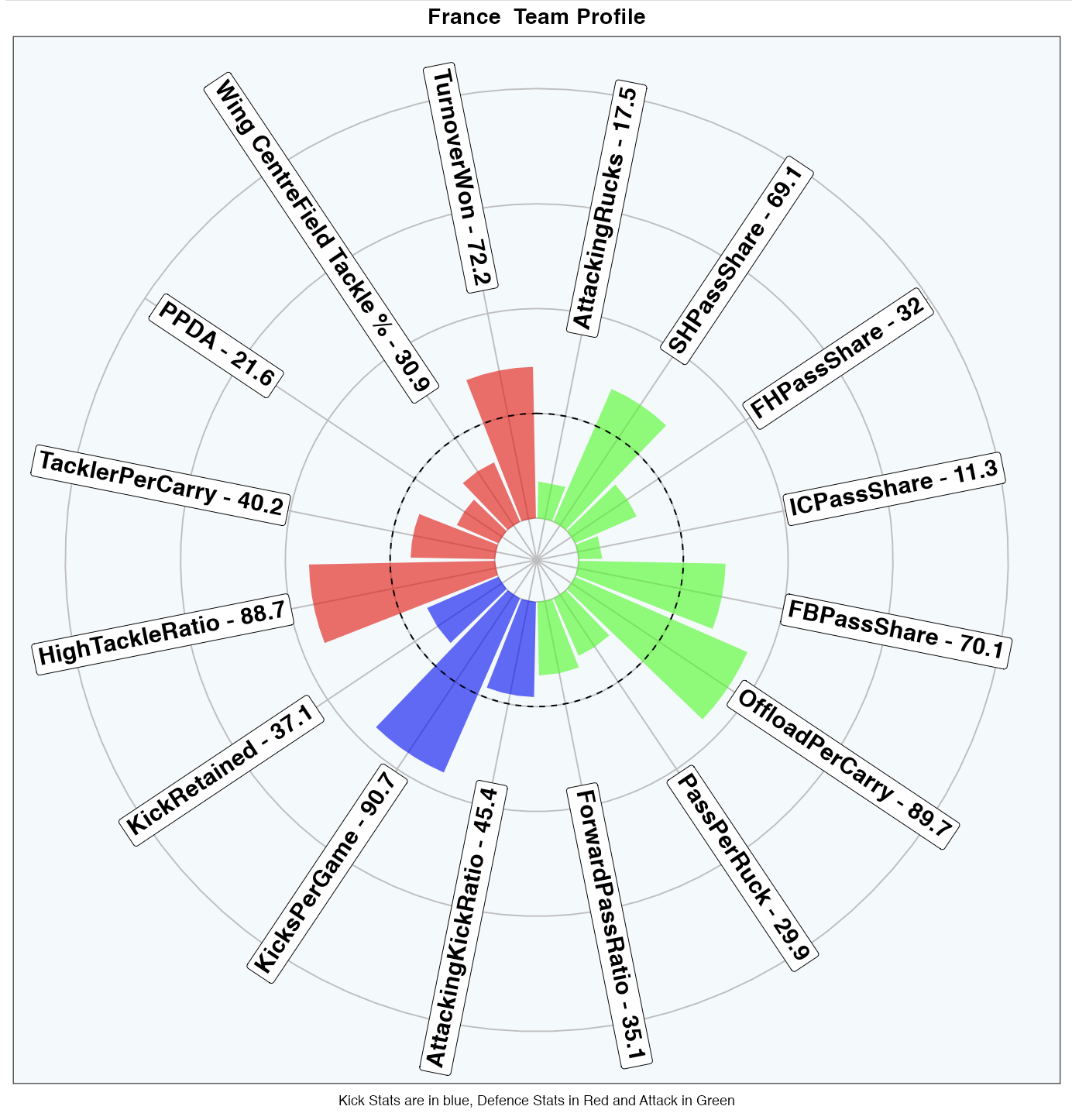
A big part of the French game plan is offloading, as Les Bleus throw more offloads than 89% of teams across Tier 1 club competition and International rugby. This helps allows them to avoid rucks and stay on top of their opponents.
Take the opening try from the game against England earlier this year. Ollivon carries first and picks a hole between two English tacklers before getting his hands free. Thibaud Flament loops around to take the ball on Ollivon’s shoulder, making ground before offloading again. A simple two on one for Penaud sees Thomas Ramos score in the corner.
What’s remarkable is that the offloading is spread across the team. The French forwards offload the 2nd most per game across International rugby with minimum 10 games. With New Zealand the only international side who bested them. The clip below shows this ability well, Gregory Alldrit breaks from a scrum and has support on either side. He controls the ball well in contact and lifts the ball into the hands of Charles Ollivon who can crash over and score.
Lighting Fires: France’s Pick and Go Game
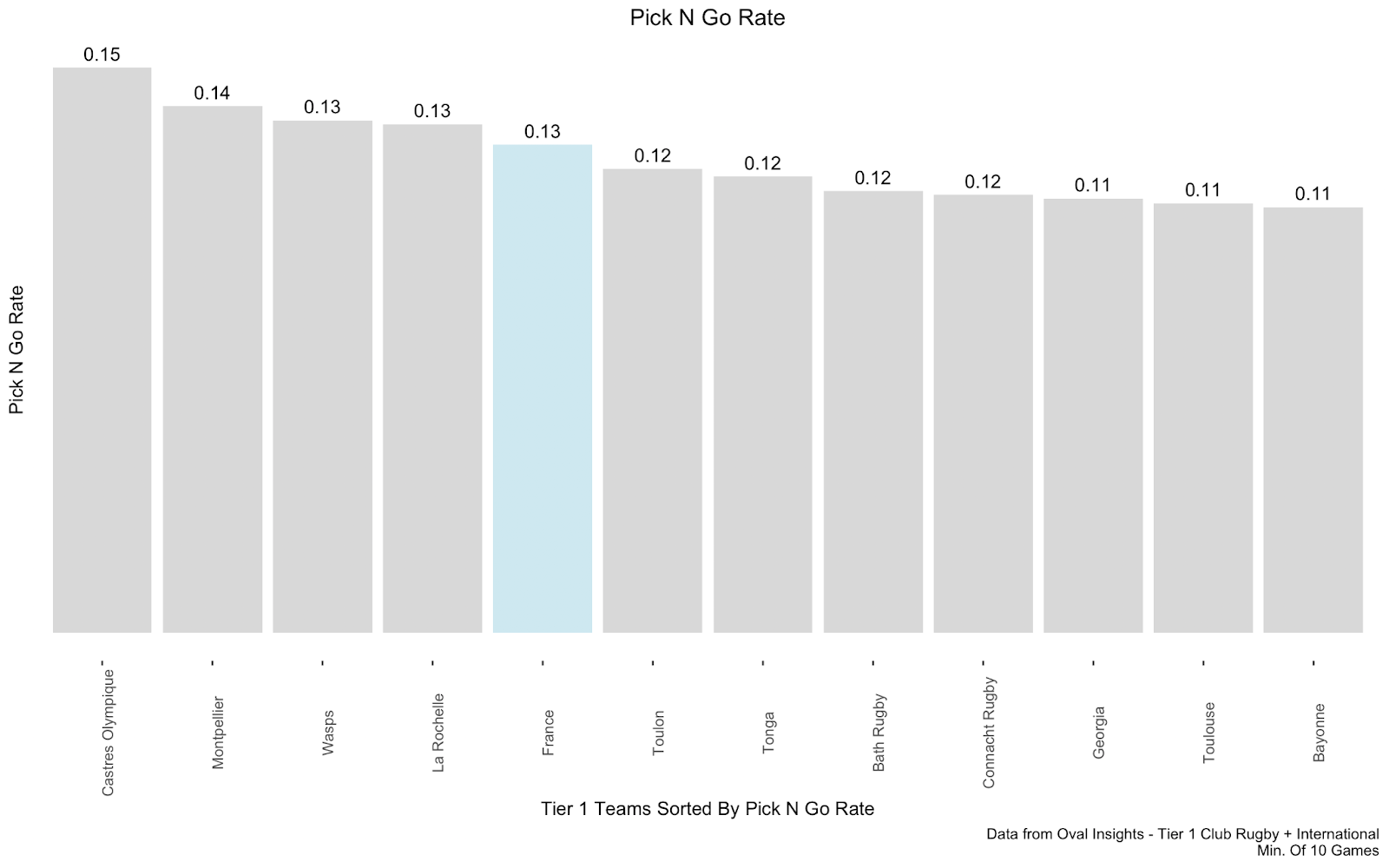
The French prize continuity in their attack, a by-product of speed, another tool they use to keep this continuity is their pick n go game. No International side, with a minimum of 10 games, pick and go as much as the French. Their pick and go game is particularly effective when they are on the front foot, allowing them to stay on top of their opponents.
Take for example this passage of play against Japan, where France used their tight attack, including multiple pick and go thrusts to keep momentum in the attack. The first comes from Julien Marchand who takes the ball and immediately challenges the Japanese defenders folding around the corner.
Then after a couple of carries behind the gain line, France reverted to the pick and go, helping them get over the gain line thanks to Romain Taofifenua. This gives them some momentum again tying up the folding defenders. Julien Marchand then picks again and beats the first defender. The hooker’s control on the floor isn’t great but France win a penalty.
The roots of this pick and go game can be traced back to Galthie’s attacking intent:
“You try to create small fires around the ball in attack and defence. The French team tries to do that by putting a small company around the ball. About five players. We try to be quick.“
France’s company of pick and goers around the ball is clear in that attack against Japan. The presence of the company means that rucks are well resourced and France are able to keep the speed in their attack.
Line And Length: The French Kicking Game
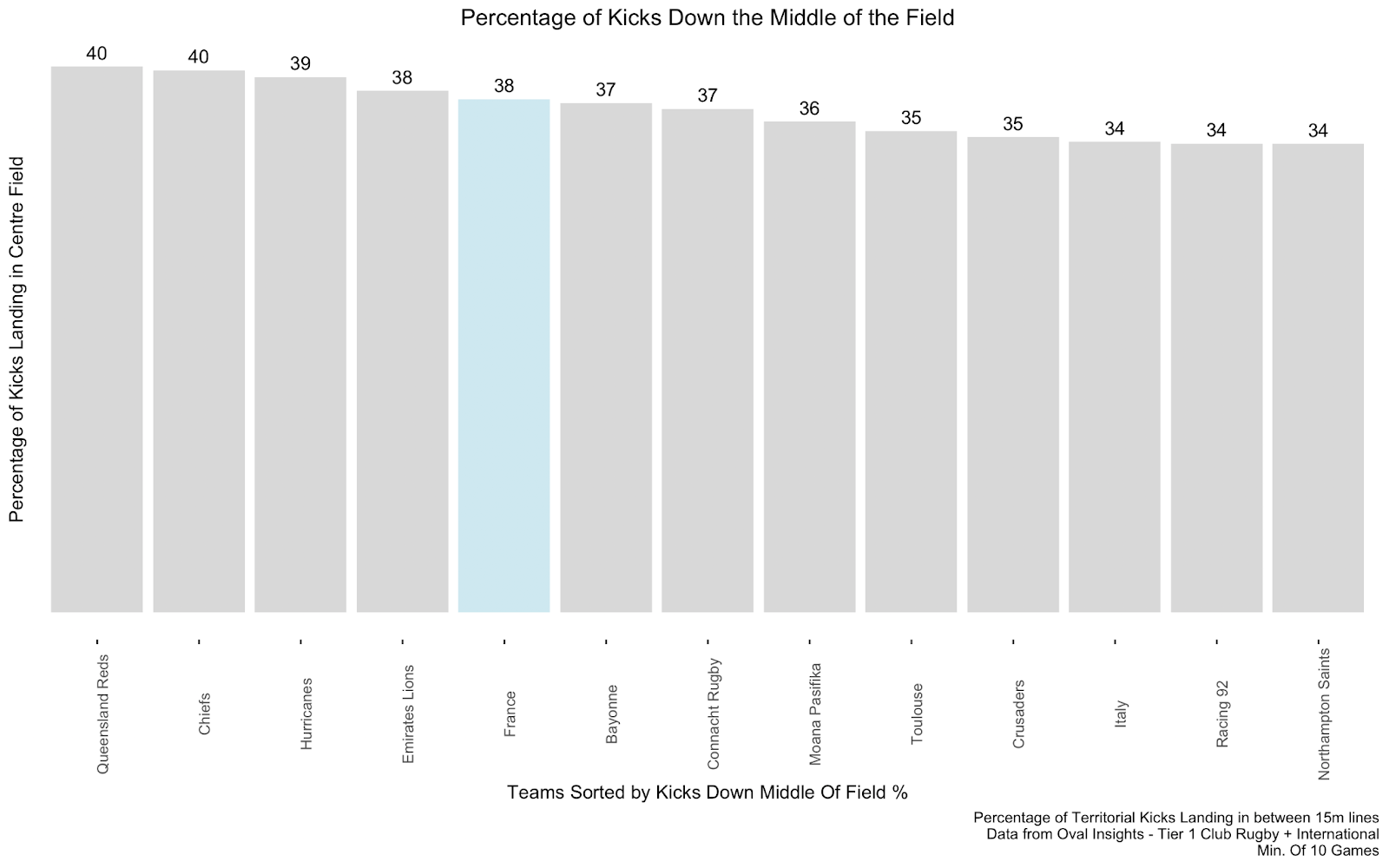
What’s great about France is they have found a good blend of pragmatism alongside their fearsome attack. When the attacks slowed down Les Bleus resorted to kicking the ball allowing them to shift pressure onto the opposition. The style of kicking employed by Les Bleus is an interesting: the French kick down the middle of the park more often than any other international side sitting 5th across high level pro rugby.
The reason behind this kicking strategy is to help Les Bleus control the backfield and apply pressure to the opposition. This strategy is very effective as it targets the space left by the 13+2 defence. Typically in a 13+2 defence, the two backfield defenders sit wide protecting kicks angled into the 15m channel, limiting the chance of the 50/22. France instead kick deep into the backfield maximising distance and forcing the two backfield players to retreat and return fire from a less advantageous position.
Take this kicking battle against New Zealand, the All Blacks start having received a box kick just inside the 15ms and then return fire. Ntamack collects the ball but is under a little bit of pressure so fires back a low kick splitting the backfield. Jordie Barret is forced to turn and NZ start this second attack 10 metres further back, with France beginning to establish control. The French stranglehold is then confirmed as Jordie Barrett kicks the ball out on the full having attempted a brave cross field kick to try and get back into the kicking battle.
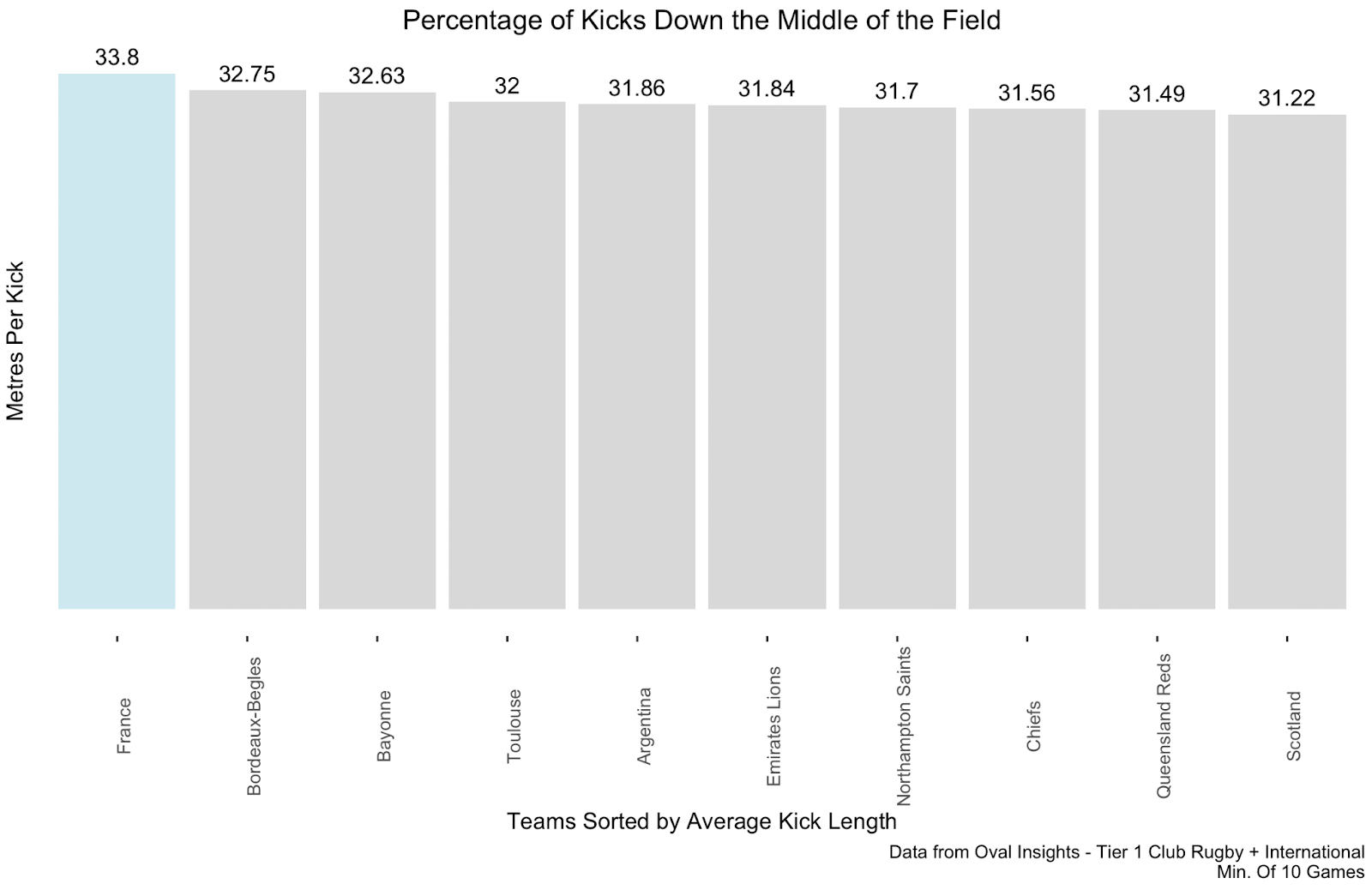
The final element of their kick pressure game is simply the length of kick that France uses. Les Bleus averaged 33.8 mètres per kick, more than any top level side with a minimum of 10 games.This allows them to keep opposition pinned within their half, and unless opponents can match the distance then France can attack from higher up the field.
Does Glory Await?
Despite losing Fly Half Romain Ntamack , France remains a strong contender for the World Rugby’s top prize. Their attacking style exemplifies the French approach, featuring dynamic offloading, ball retention, with a focus on quick ball. While Galthie’s fire lighting pick-and-go companies aid the desire for momentum. Their kicking game allows them to gain the upper hand and control opponents. Despite a challenging draw, including an opener against New Zealand and potential tough quarter-finals, France could break the Northern Hemisphere’s World Cup drought and secure victory.
 The Analysis Guy