
Uruguay became the darlings of the 2019 rugby world cup with their win over Fiji, ranking as the biggest upset at the tournament. The South American side have gone from strength to strength since, making history by beating the USA overturning a 3 point deficit in the second leg of the play off to secure their ticket to France 2023.
The most impressive aspect of the Uruguay side is their wide play, their scintillating backs will be key if they are to cause another upset this time around.
The graph below shows the centre field carry % for each side in international rugby. Uruguay make 62.77% of their carries between the 15m lines, compared to an average of 66.63% for the rest of international rugby. This difference is even starker when we consider it by zone on the field. When playing outside their own 22, Los Teros make fewer centrefield carries than over 75% of International teams.
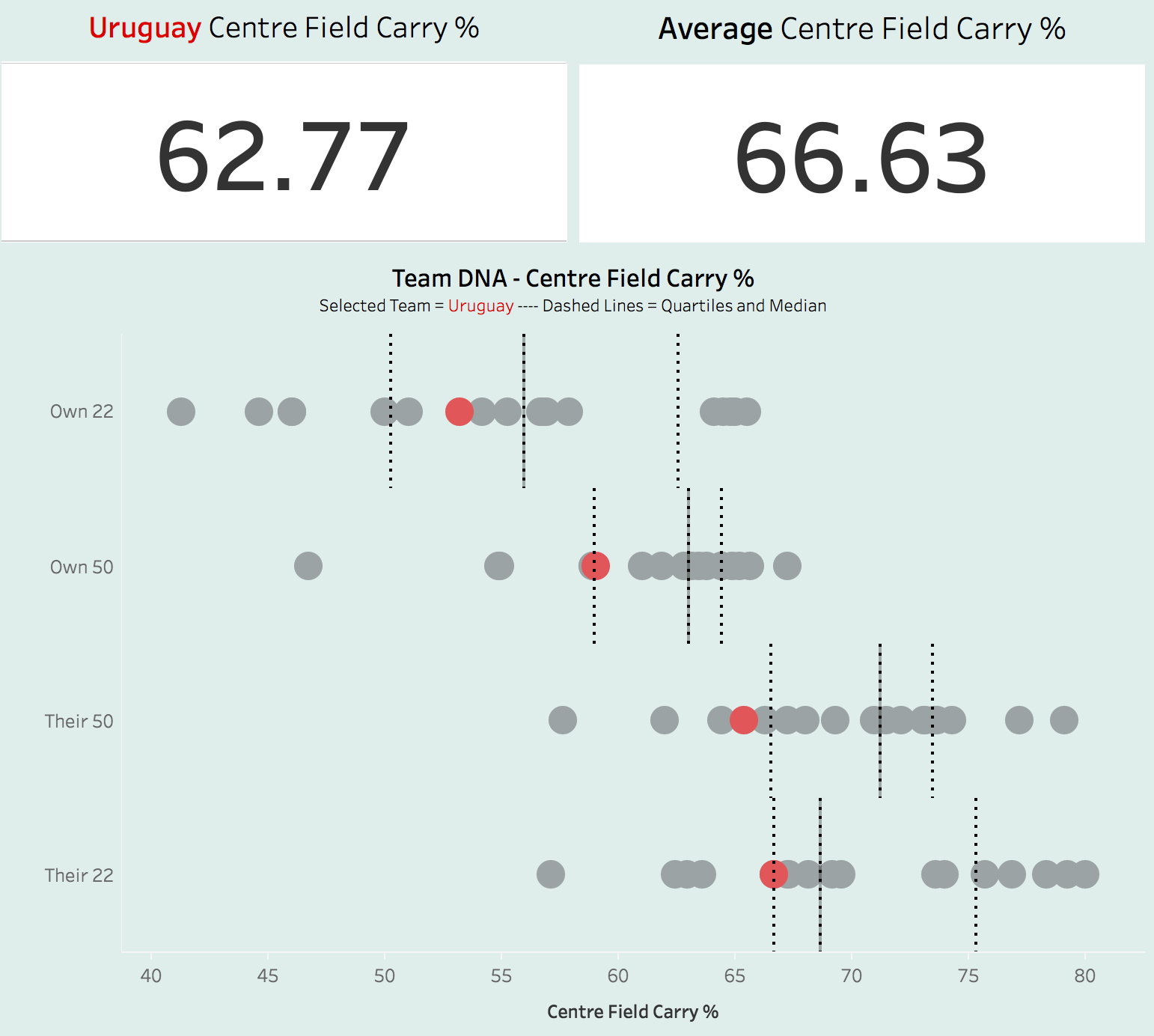
This wide carrying is key for Los Teros who will look to stretch teams and unleash their speed out wide. However the manner in which the Uruguayan side achieved this is of particular interest. They rely on their backs to shift the ball, while allowing their forwards to focus on simply carrying hard. The South American’s backline averages more passes per carry than the average in international rugby but their forwards are much more direct, making 0.36 passes per carry compared to the average of 0.47 passes per carry.
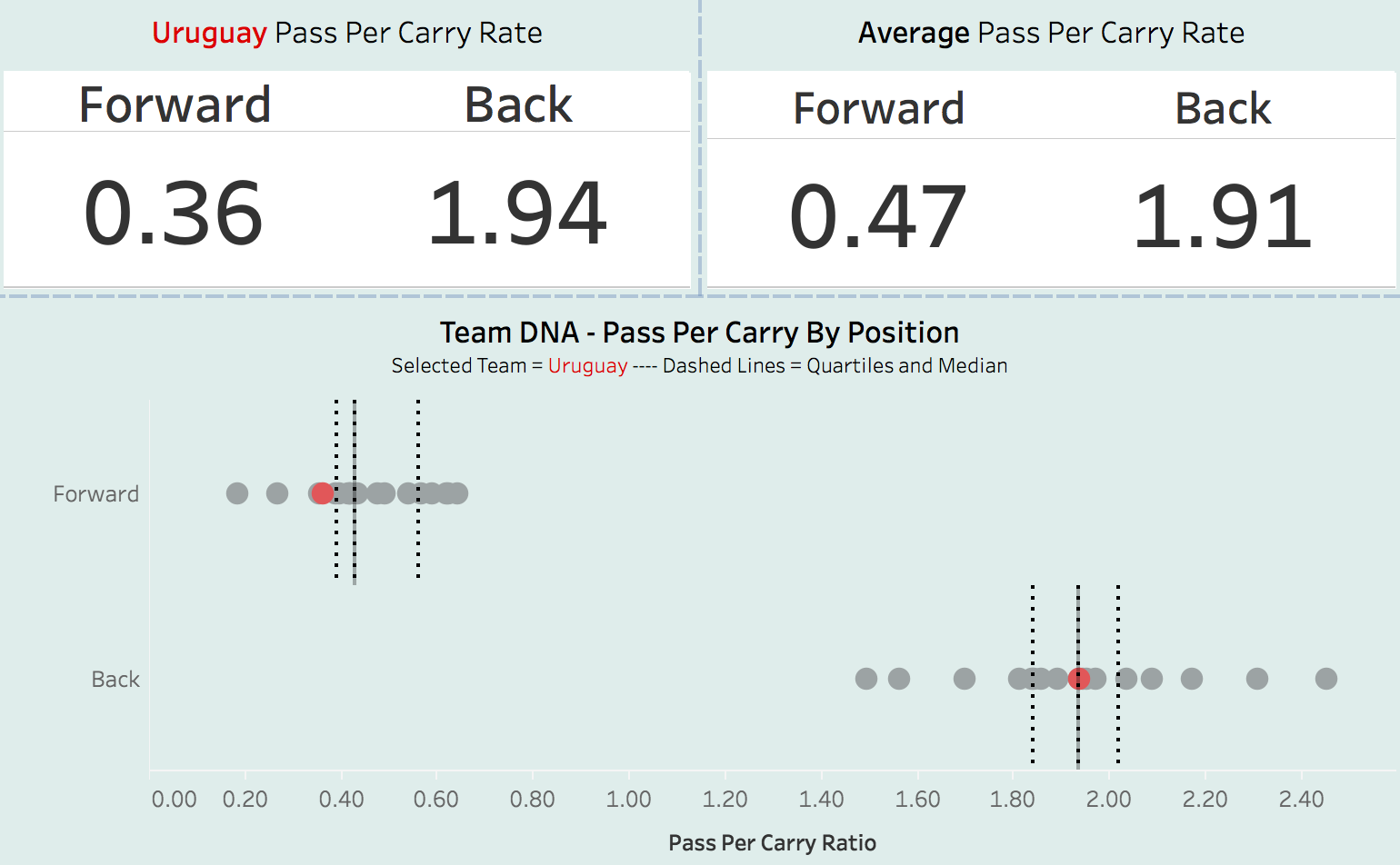
Now we know the numbers behind their attack, let’s look at how they use the wide channels to pick sides apart. This attack has two key elements, firstly how Uruguay stretches the field during phase play.
Filling the Field: Los Teros in Possession
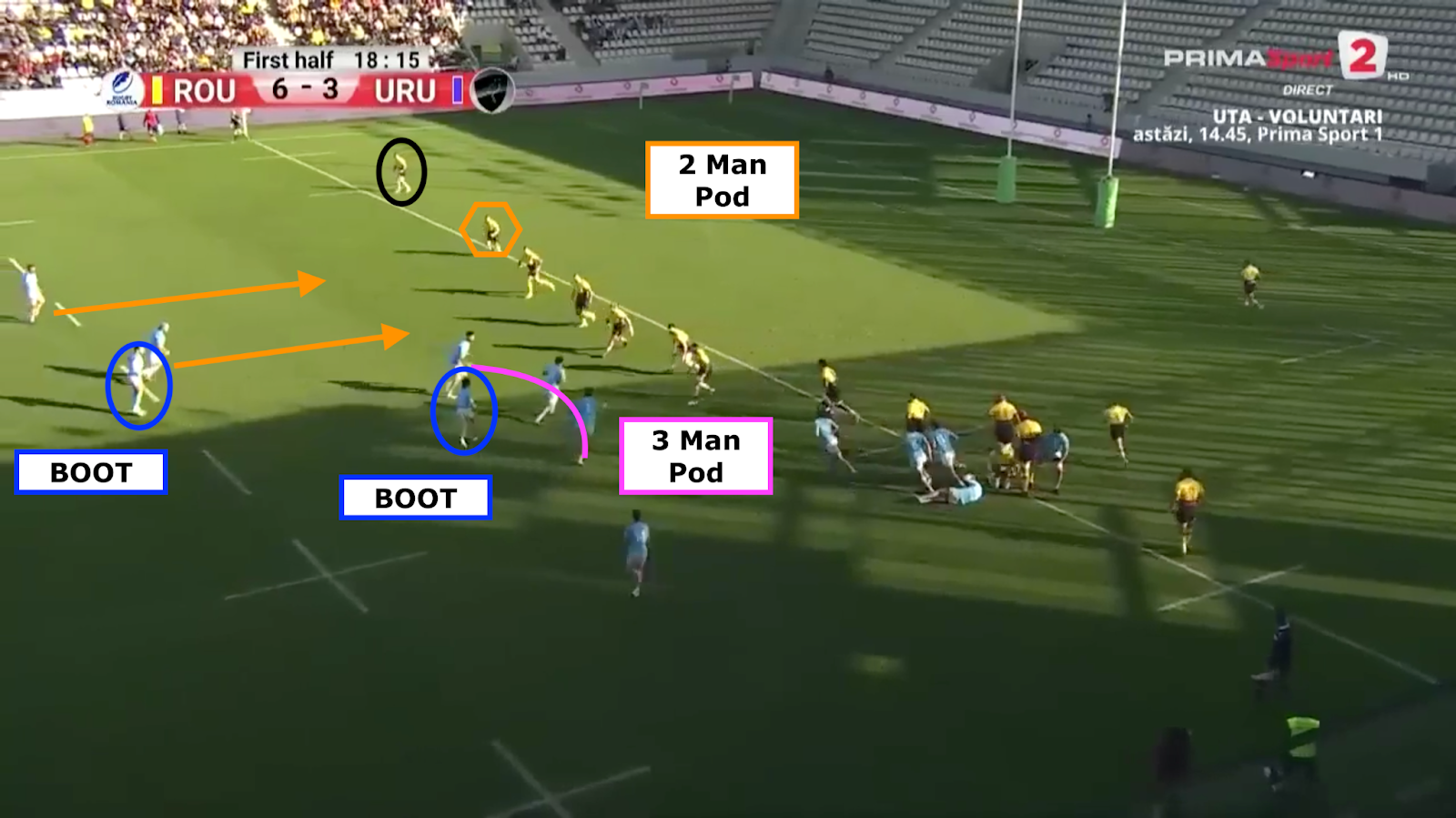
The first example of this wide attack comes from the Los Teros game versus Romania last year. Having just turned over the ball they look to play the ball wide. They regain their shape quickly during the transition which allows them to find the edge of the Romanian defence.
The Uruguayan set up in a 3-2 shape. This simply means they have a pod of three players followed by a pod of two players. Within each pod shape there is a player who operates out of the boot. The player in the boot acts as a linking player, and as such it is a role filled by the Uruguayan backs using their superior handling to add width to the attack.
The beauty of this setup is that there are multiple options for each playmaker when they receive the ball. Using this set-up allows them to narrow up the Romanian defence and attack the edge. The pink pod holds the tight defenders, and the orange pod pins the edge. The orange pods are targeting the defender circled in Orange, which helps to create the 3 on 2 in the wide channel and enables Uruguay to make ground.
Strike For Success
Width is a key component of the Los Teros strike as well, with Uruguay often using strike plays to reach the far touchline. Let’s start by watching the first phase in the build up to the try against Tonga.
The play starts from a lineout just over the 10m line in Tonga territory. Uruguay have called the play to start from a 5 man lineout, this allows them to use additional forwards as carriers within the backline.
The South Americans utilise a double layered strike move with the chance to hit both short and wide from this lineout. This helps fix the inside players and prevents the drifting defence taking all their space on the edge. The first part of this move is to get the ball into the hands of 13 (first black line) Felipe Arcos Pérez who fixes the defence with the 8 on the outside.
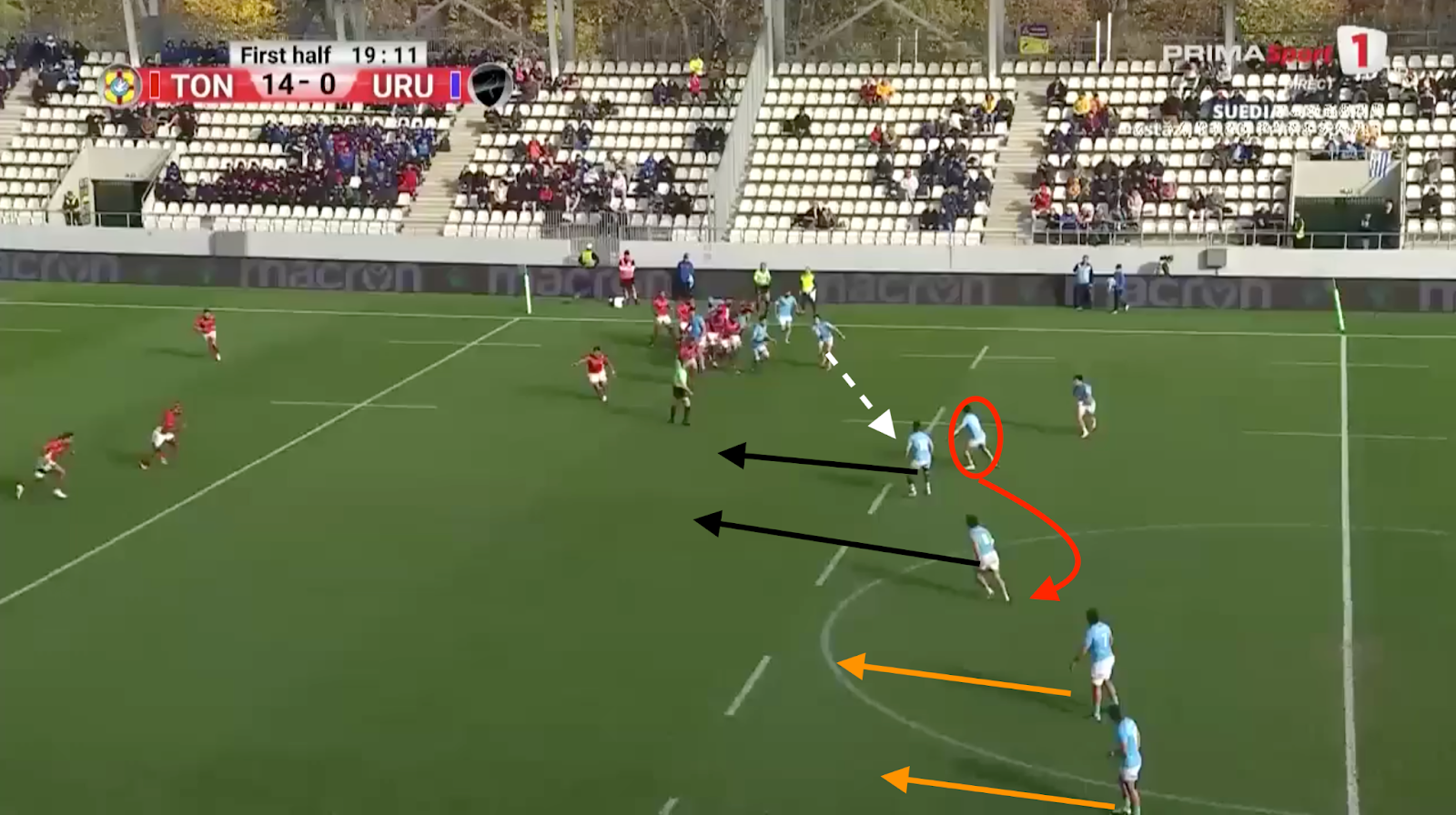
The player in the red circle, number 10 Felipe Etcheverry, acts as the linking player between the first and second waves. By starting on the inside off the hard runners, Etcheverry, hides himself from the defence. The Fly Half can then receive a back door pass before creating an overload on the edge of the Tongan press. This is best seen in the screenshot below.
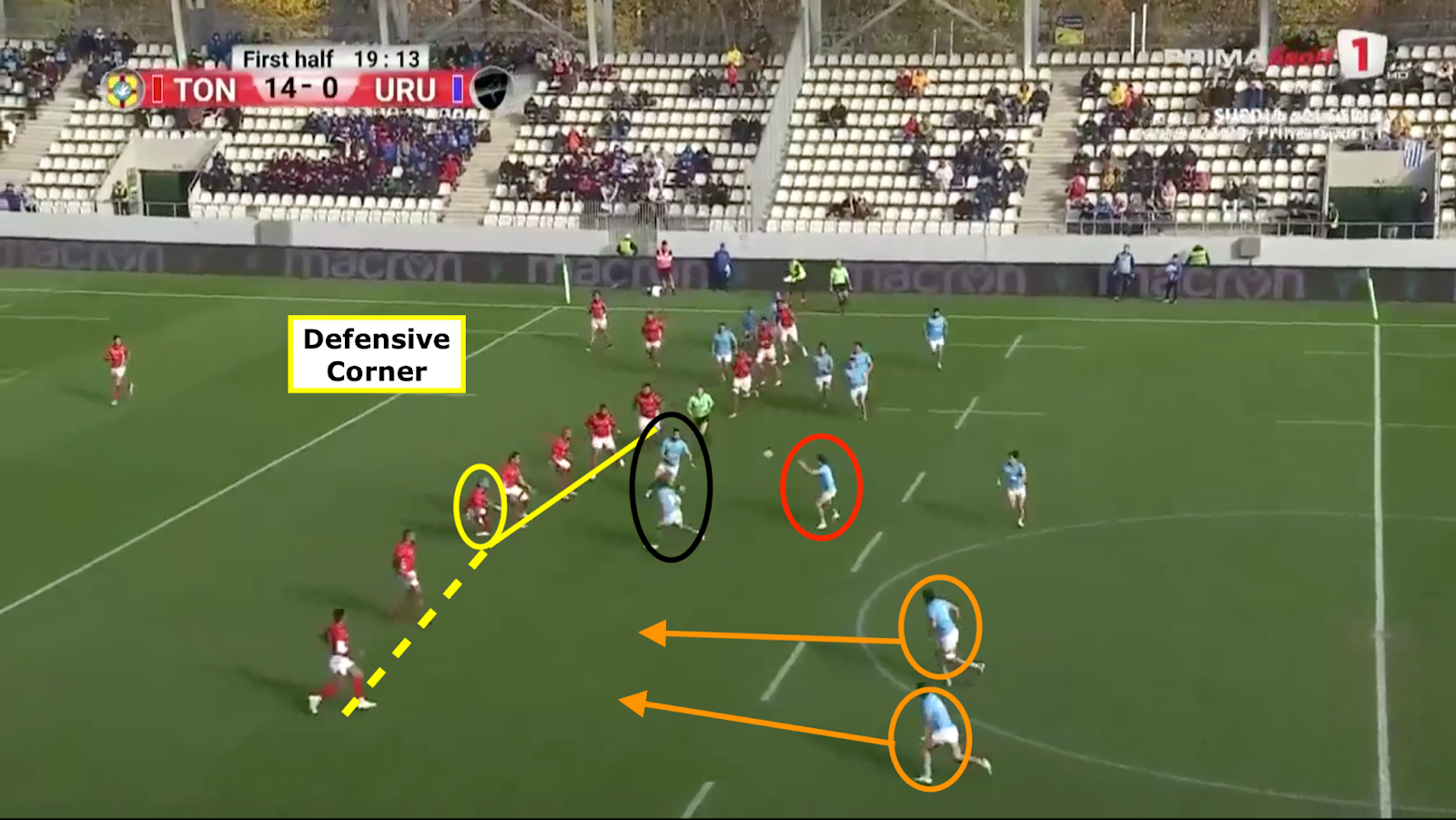
The first wave of the attack has done their job, with the black options tying up the initial Tongan defenders on the solid Yellow line. Their aggressive line and the sweep from Etcheverry in the red circle has played an important role in disconnecting the Tongan’s defensive corner in the Yellow Circle.
This helps isolate the two final defenders in the Tongan press. This isolation has caused the final defender to begin over chasing, and a slight dog-leg has begun to form with the two runners in the Orange circles poised to expose it.
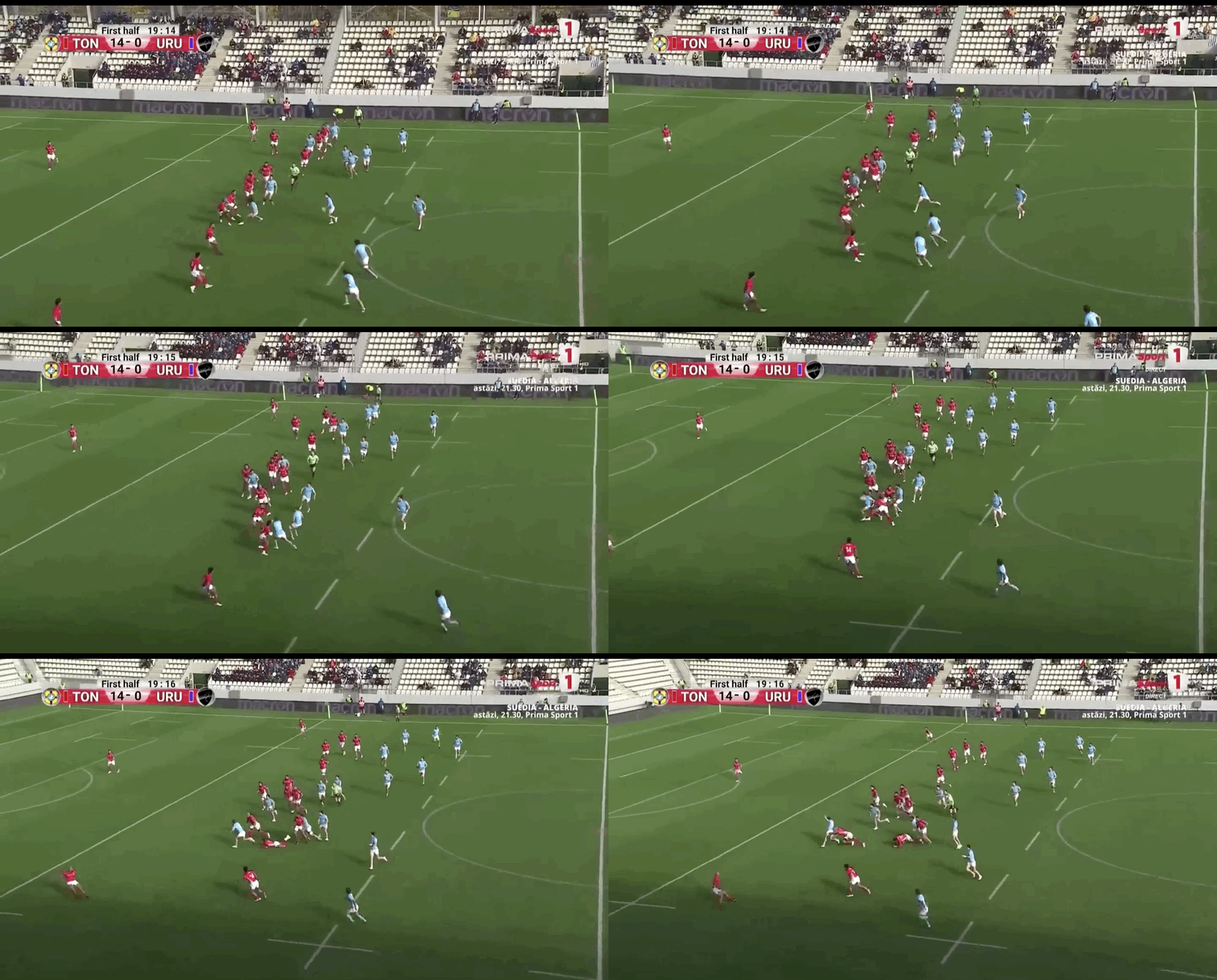
This disconnect is something the Uruguayan hard runners are able to expose, striking back into the gap between the final two defenders. The looping Etcheverry plays flat to the line meaning that the Tongan defender over-exposes his inside shoulder. This allows the hard Uruguayan runner allowing Los Teros to get over the gain line.
The play continues as we have seen with the Los Teros backs working around the corner to score in the corner. The driving themes of this strike move are similar to those that underline their phase play attack. The use of multiple layers to create disconnects in the defence with backs playing a crucial linking role to unpick the opposition.
Uruguay at Rugby World Cup 2023
Los Teros will be looking to build on the growth of South American rugby, and look to cause another shock at the World Cup in 2023. With the presence of Namibia in their group 1 win should be the minimum target. The wide attack discussed above will be key if they are to cause issues for Italy, the most likely shock for Los Teros. Regardless of their results though uruguay are sure to put on a show and are a good candidate as a second team to support.
 The Analysis Guy