
The Rugby Championship began with a disappointing defeat for the Wallabies as they lost 43-12 against the Springboks. While the defeat will leave a sour taste we began to see the changes that Eddie Jones is looking to make this Australian side his own. Today we examine how Jones’ use of wingers varies from Rennie before looking at where the Australians will need to improve to get their Rugby Championship back on track.
Dave Rennie’s Inverted Wingers
Under Dave Rennie the Wallabies frequently used inverted wingers. This means Australia’s wingers were often used as carriers in midfield. Over the last two years the Wallabies wingers made 46% of their carries between the 15 metre lines. Teams typically defend with tight forwards closer to the breakdown and the Wallabies looked to create speed mismatches by using their wingers in an “I formation” behind their scrum half.
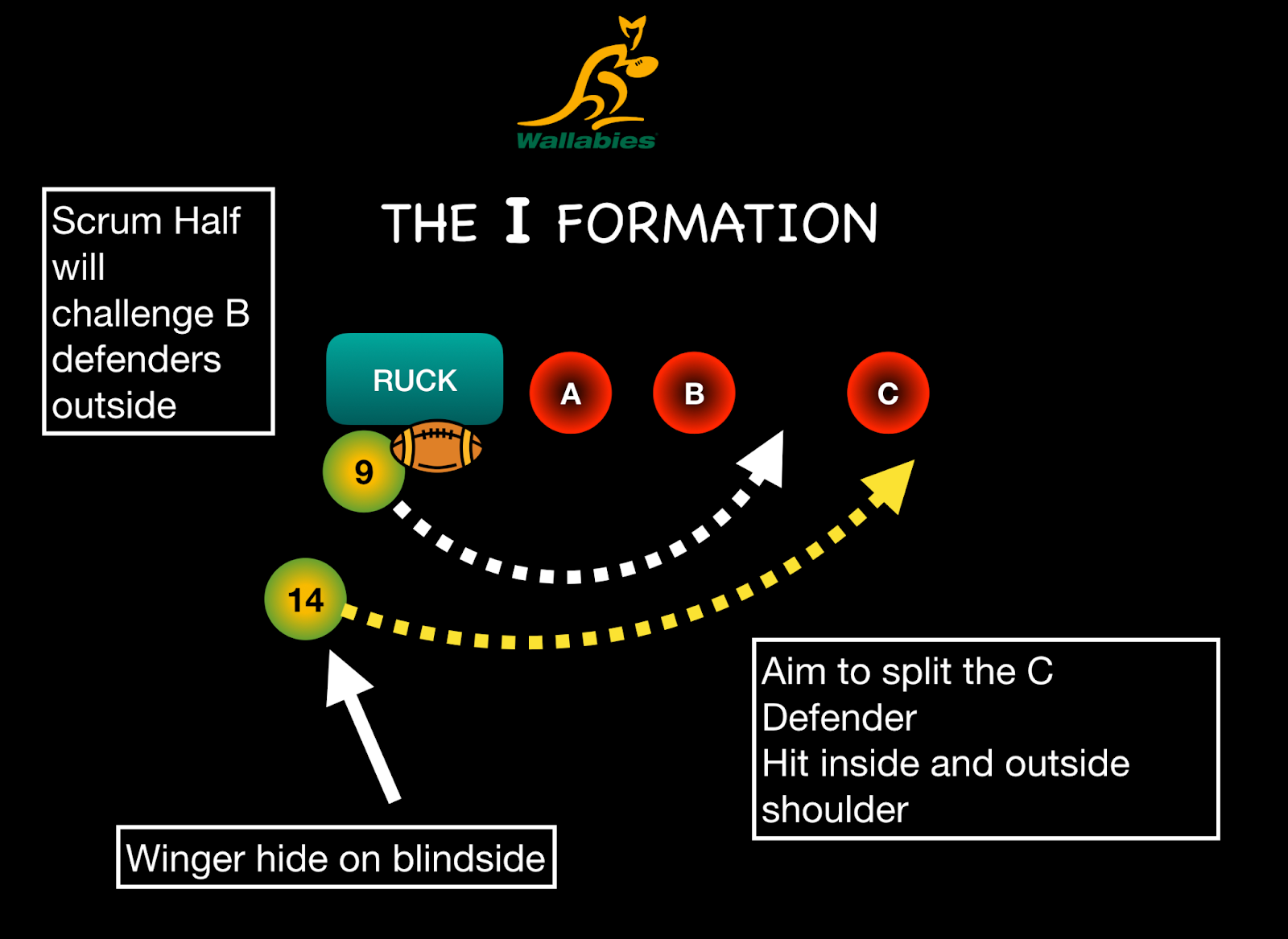
The clip below from Australia’s victory over Wales in the autumn shows this well. Mark Nawaqanitawase positions himself behind scrum half Jake Gordon to hide from the fringe defenders. Gordon then snipes and Nawaqanitawase fades to his outside before taking a pop pass and challenging the line. The speed and agility of the winger sees him beat 3 defenders before riding the tackle and offloading. The ball goes to ground at the end of the play but it’s a good example of how Australia tried to create mismatches with their wingers.

This example from their game versus Ireland is less pre-planned but shows a willingness to attack back towards the fringes of the ruck. A bouncing ball means the Irish defence rush up and Tom Wright beats the first tackler to get to the gain line. An offload to Foley puts the Wallabies on the front foot.

Dave Rennie’s attack also utilised wingers in the pick and go game. Marika Koroibete was a great exponent of this, helping keep defences honest with his pure physicality. Take for example this clip against Argentina with Koroibete making a pick and go before then clearing out a ruck to keep possession for Australia.
This is a trait we may see continued under Eddie Jones, who can forget the games he played with the media around Jack Nowell and the England number 7 shirt. Jones will look to have at least one of his wingers operate as a workhorse. The numbers show the similarity between how Eddie Jones’s England and Australia under Rennie used their wingers. In 2022 England’s wingers made 45% of their carries in the midfield, in the same season Australia made 44% between the tram lines. Opposition fringe defences will certainly have to remain connected to shut down the Wallabies attack.
Australia’s Tight Attack
The fringe attack didn’t just stop at their use of wingers, Australia also represented one of the most 9 driven attacks in professional rugby. Their 9 contributes more passes to the backline than 90% of other sides.
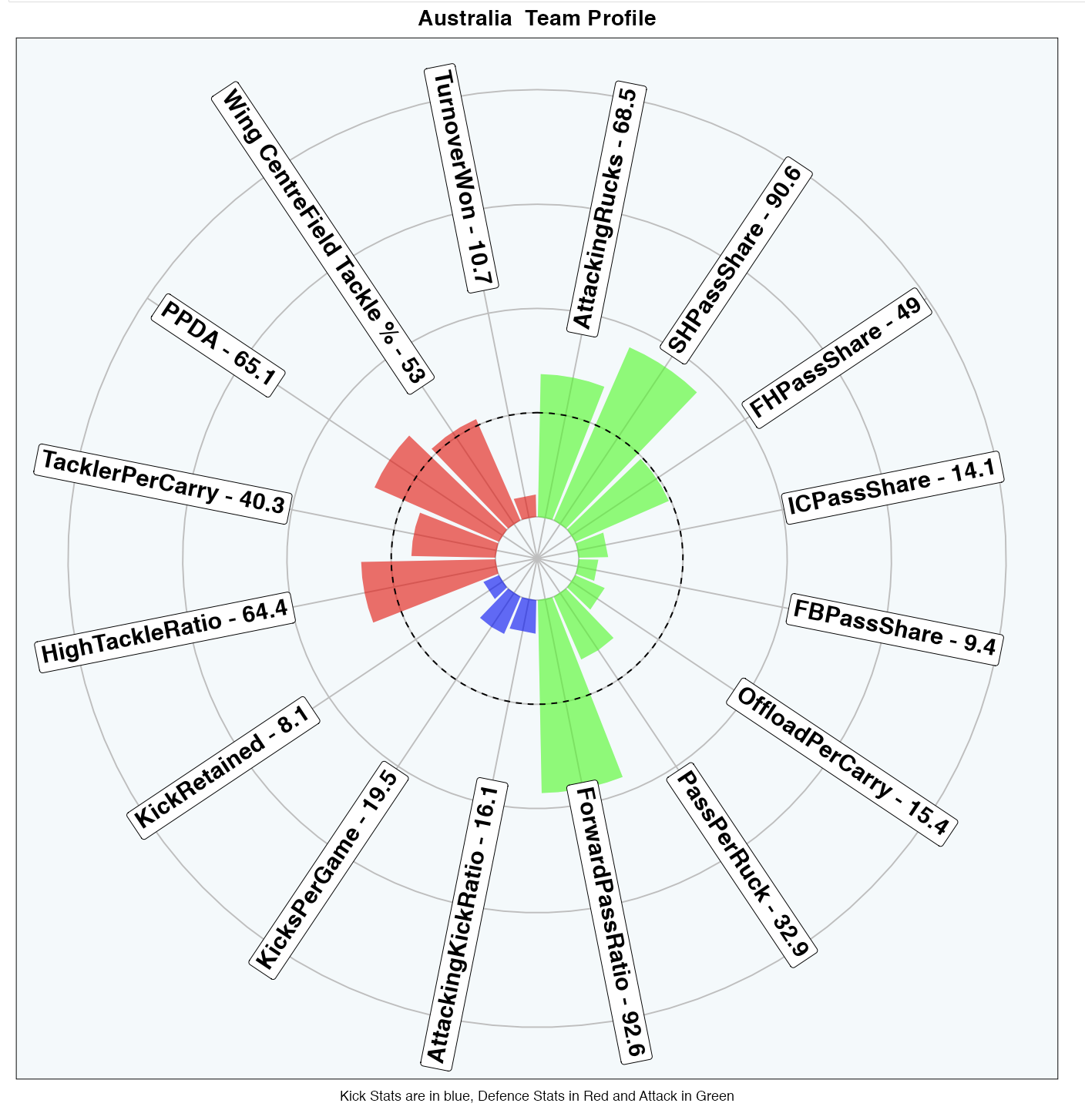
The play around the fringes became a really key theme of the Rugby World last year, and Australia were able to expose this space frequently. One of the drivers of this was how good Nic White was in motion.
Take this play against France. Nic White scans as he’s approaching the breakdown and is able to explode from the base following good presentation from the carrier. This also allows him to draw an offside penalty while opening a space for the Australian 8 to dent the French line.
This score (though it was ruled out) against Ireland is another good example of their fringe attack. The move has similar design to the one above versus France. Both come from Australia switching direction to attack against the grain. Against Ireland a wide pass from White to James slipper has stressed the Irish fold. This results in Andrew Porter being left defending far too much space. White spots this and darts to the left. Hooper has set himself in the “I Formation” we discussed earlier while Mark Nawaqanitawase is an option to Nic White’s left. This means Ireland are defending a 3 on 2. White’s wide arc puts him directly in the gap between Porter and McCloskey and neither is able to stop the scrum half getting over the line.

Under Eddie Jones we are likely to see a shift from this 9 driven attack. The scrum half made 63% of England’s play maker passes compared to Australia’s 74% in 2022. The development of the Australian attack will be key for any smash and grab attempt at RWC 2027.
Merging the Two
Australia began their transformation against the Springboks with their scrum half making 64% of their playmaking passes almost identical to Eddie’s England. It did come off a turnover ball, but the first try from Marike Korobette showed their desire to spread the ball. Two quick passes taking play from one touchline to the other, and beating the South African press to score in the corner.
In phase play we saw the Wallabies use multi-layered plays to try and create mismatches outwide. These involve two or more options with a hard runner trying to fix the inside defence and a pull back option offering the width.
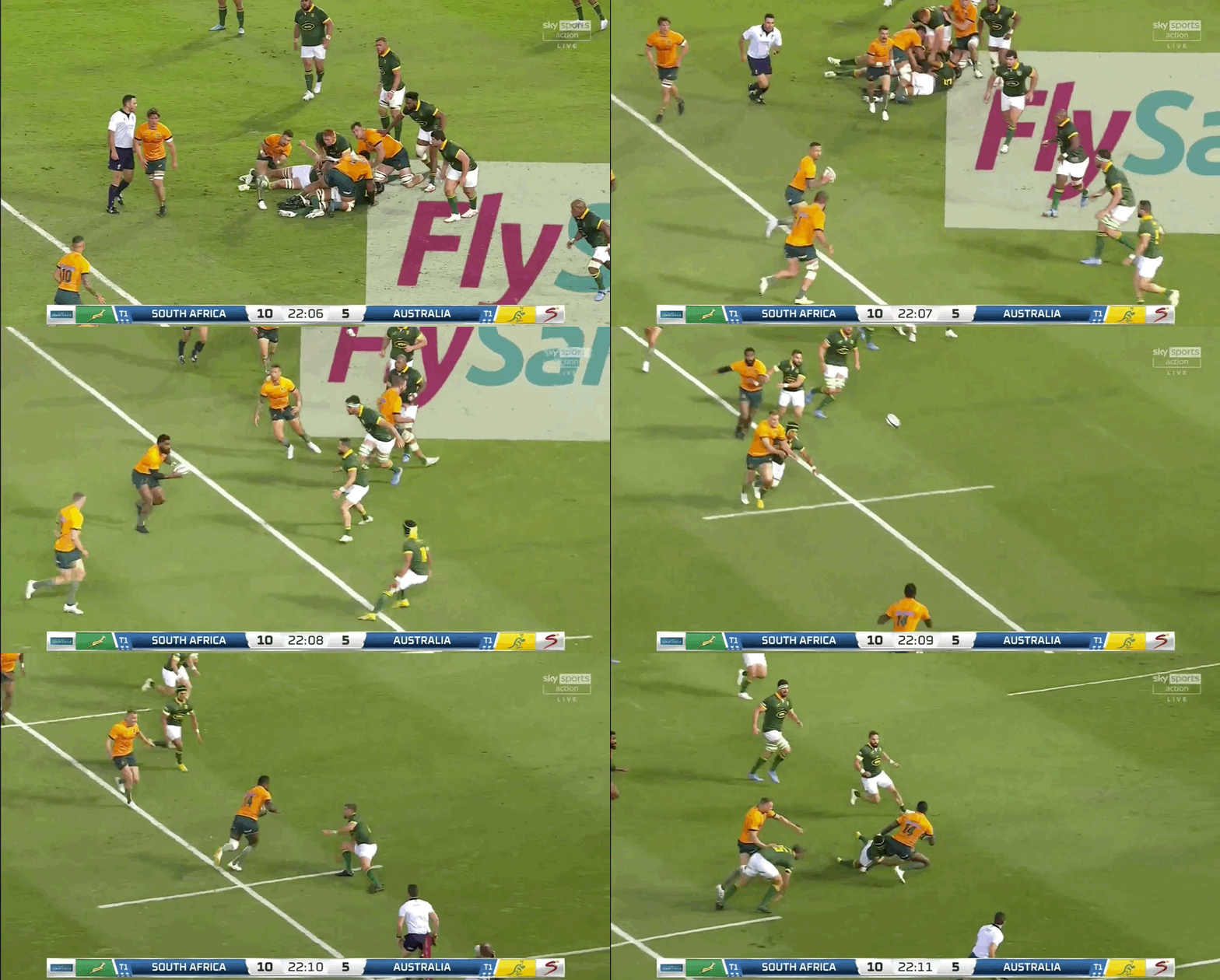
This phase shows the space they were trying to attack Saturday. Quade Cooper engages defence before snapping the ball behind for Marike Korobette but rather than carrying the winger floats one to right winger Vunivalu. They do find the edge and are able to play around the South African press on this occasion. But it was a picture that was few and far between for Australia on Saturday..
The South African Strangle: Why the Wallabies Struggled
Australia were unable to impose themselves on Saturday and will need to tweak their game plan this weekend, maybe consider using their winger closer to the fringes as we saw under Rennie. This is because they lacked a physical punch and South Africa were able to dominate the gainline. The pivot away from their tight fringe attack to the wide game plan Eddie Jones is going to be a difficult transition but merging both weapons could well help them move forward.
However their biggest problem was not the merging of two styles of play but that they couldn’t impose themselves on the game across the full 80 minutes. The graph below shows the field tilt, or territorial dominance of each side with South Africa in blue and Australia in red. The blue dashed line shows the average field tilt for both teams.
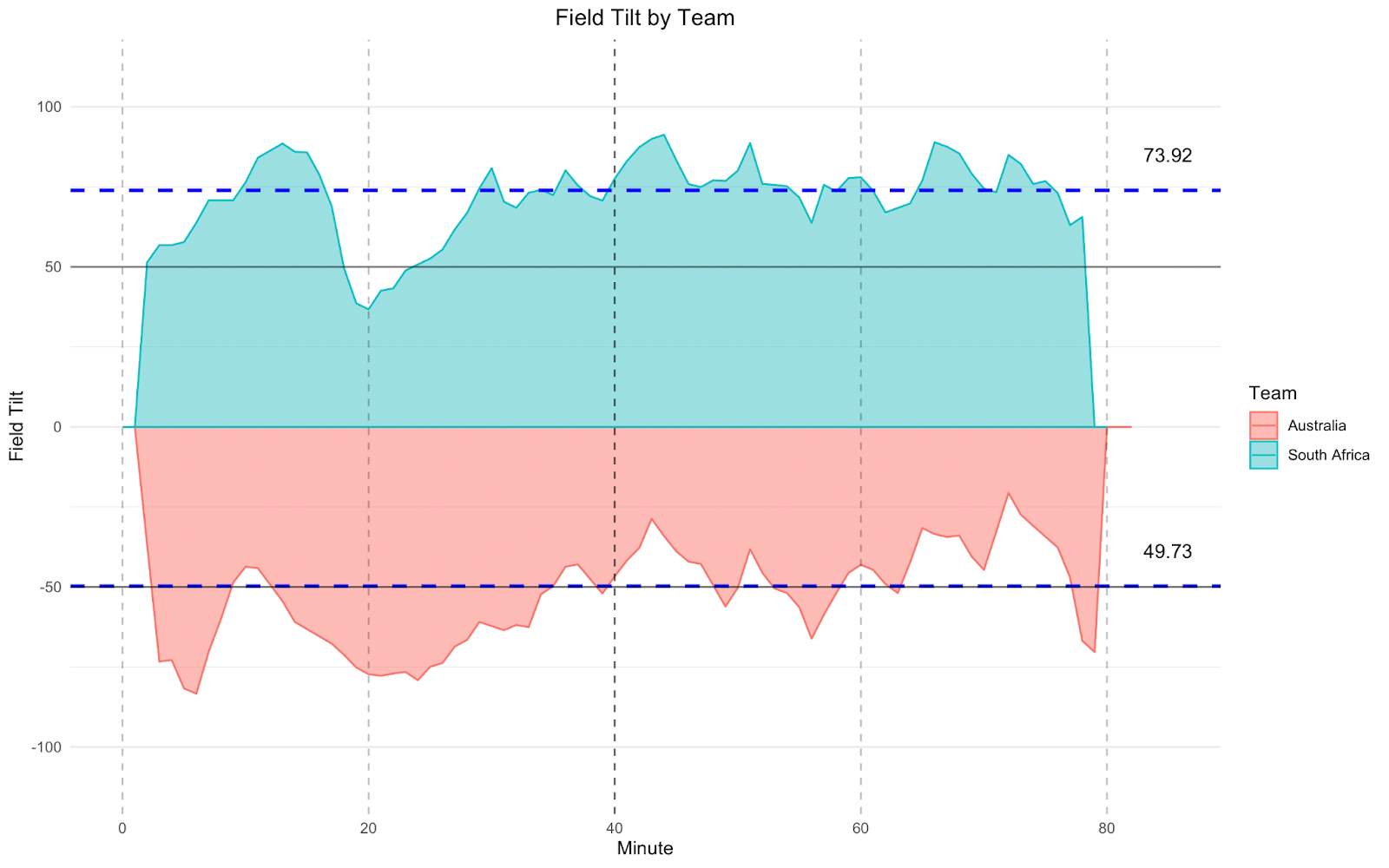
South Africa were able to strangle the Australians and prevent them gaining a foothold. Australia had an average field tilt of 49.73, meaning the average position of rucks was within their own half. While the South Africans field tilt was 73 so they attacked for the majority of the game from just outside the Australian 22. And apart from one small period they were anchored in the Australian half.
Eddie Jones will have a lot to tweak this week before the Argentina game but it will have to start with establishing a firm foothold and applying territorial pressure. Argentina will have no rollovers in this regard with a strong kicking game. However it will be an important challenge in Eddie’s first game in front of his home fans.
Assessing Australia
Last weekend proved a rude awakening for Australia, there’s not much sugar coating for a 43 to 12 defeat. Part of the reason behind this is the new expansive manner of playing that Australia are transitioning to after the inverted wing and tight play of the Dave Rennie regime. Having this style of play in the back pocket will be good for Eddie moving forward though he’ll certainly be looking to stretch teams as Australia did for their first try this weekend. This will rely on more physicality in their carrying game with South Africa’s starting tight five making 44 metres from their carries over 2.5x more than their Australian counterparts. Patience is key and it is important to remember we are still at the bedding in stage for Eddie Jones but he will certainly be demanding improvement from his Wallabies as he looks for a first victory against Argentina.
 The Analysis Guy