
The Rugby Championship returns this weekend and with a World Cup around the corner it forms a crucial stage of preparations. The current World Champion Springboks are playing host to the Wallabies as they begin their international year. Let’s look at how they have played and what we can expect come Saturday.
Playmaking Full Back Key To Wide Attack
Few players captured the imagination of the rugby public at RWC 2019 like Cheslin Kolbe and Makazole Mapimpi. The two Springbok wingers offered work rate, calm under the high ball and an ability to beat players with ease in the wide channels. And it’s in these wide channels that we start. The heat map below shows every carry made by a South African winger, removing kick returns, since 2021, and it paints a clear picture. Jacques Nienaber’s wingers stay in the wide channels rarely venturing inside the 15m.

Within international rugby most sides have their wingers average more than 40% of carries happen between the 15m lines, as teams look to create speed mismatches. The Springboks however differed significantly from this with 80% of their carries happening in the wide channel (between the 15m line and touchline) as they look to use their pace to create breaks out wide.The graph below really emphasises the difference, with no other international side carrying more than 67% of their ball in the wide channel.

So why do the Springboks use their wingers like this? Certainly some of it is driven by their personnel, of the top five wingers for breaks per carry in the wide channel two, Cheslin Kolbe and Kurt Lee-Ardense, play for South Africa while Makazole Mapimpi sits 6th. All helping South Africans create the third most breaks per carry in the wide channel, and second most metres per carry out wide.
But the South African wingers only form part of their back three, with perhaps the crucial Springbok wearing the 15 jersey. For South Africa, those wearing the Full Back operate as a key second play maker. One of the best ways to see this is by looking at their pass contribution, the amount of passes they make divided by the total passes of the back line.
The graph below shows how much of a role the 15 plays in the Springbok attack. The South African 15 makes over 30% of the backline passes.

Willie Le Roux is a great asset in this regard, adding extra width to the South African attack and helping them find the space outwide. Willie Le Roux has created 18 line breaks from his passing since 2021 a total only beaten by Finn Russell. If we adjust to a per game total, Le Roux slides into fourth place out of a total of 376 players, not a bad return.

Having looked at the data, what does this look like on the pitch? The carry below from Makazole Mapimpi is a great example. Playing from edge to edge, South Africa use Willie Le Roux as a second playmaker. The Full Back does a fantastic job to attract Will Jordan before releasing Mapimpi. This allows the winger to make big gains down the edge.

The play does result in a breakdown steal for the Kiwis with Ioane doing really well to cover across but is still a great example of how South Africa looked to stretch their opponents.
This score from Australia is a great example of how South Africa were able to expose narrow defences.

South Africa made a great break on the previous phase and spread the ball against a disjointed defence with Mapimipi receiving the ball just inside the Australia 22 from Le Roux and scoring well in the corner. However it’s the role of Le Roux here that is all important who shows great subtlety to outflank the Wallaby defence.
In the graphic below we see how the edge of the Australian defensive line is incredibly narrow. The winger, has also pressed ahead of the main line and is incredibly focussed on the ball. This allows Willie Le Roux to fade outside and flank the defender. This creates a South African 2v1 in the 15m channel and even though Marika Korebete nearly makes it across, Mapimpi finishes the chance well. But the try all comes from the subtlety of Le Roux’s outside arc.

So what have we learnt about the Springbok Back Three? Firstly they leave their wingers incredibly wide and prefer to use them to stretch sides and occupy the 15m channel, while their Full Back operates as a second playmaker. It’s certainly a system which suits the Springboks – and the pace they have outwide as well as maximising Willie Le Roux’s talents with the ball and his distribution. If the Springboks are to deliver a second world cup on the bounce they will need the connection of their back three to fire on all cylinders.
Risk and Reward: The Springbok Defence
The most vaunted aspect of this Springbok side however is their defence. It was the primary weapon as they strangled and suffocated opposition en route to the world cup title 4 years ago. So what is the profile of the Jacques Nienaber system?

There are two very clear focusses for the Springboks – they are heavily reliant on their outside press and then when they make the tackle look to disrupt the breakdown. This outside press is something I explored in a deep dive into the Crusaders and the mechanics are similar for the Springboks. This outside press is shown by how often their wingers and centres to get high even going beyond the ball to try and force the opposition inside.
This clip from their game versus the All Blacks is a great example of how they want to defend. From a midfield ruck the Springboks on the outside look to get high, and narrow on their press. Mapimpi, the winger tracks down the 15m line and accelerates as the pass goes to Reiko Ioane forcing the step back inside.

This outside press is high risk, high reward and does leave them vulnerable. This clip from their trip to Argentina shows how the Springboks mitigate this risk. The defence relies on the inside defenders to slide under the aggressive outside press. Doing this means even if the opposition beat the press and can get the ball outwide the Springboks are able to minimise their losses.
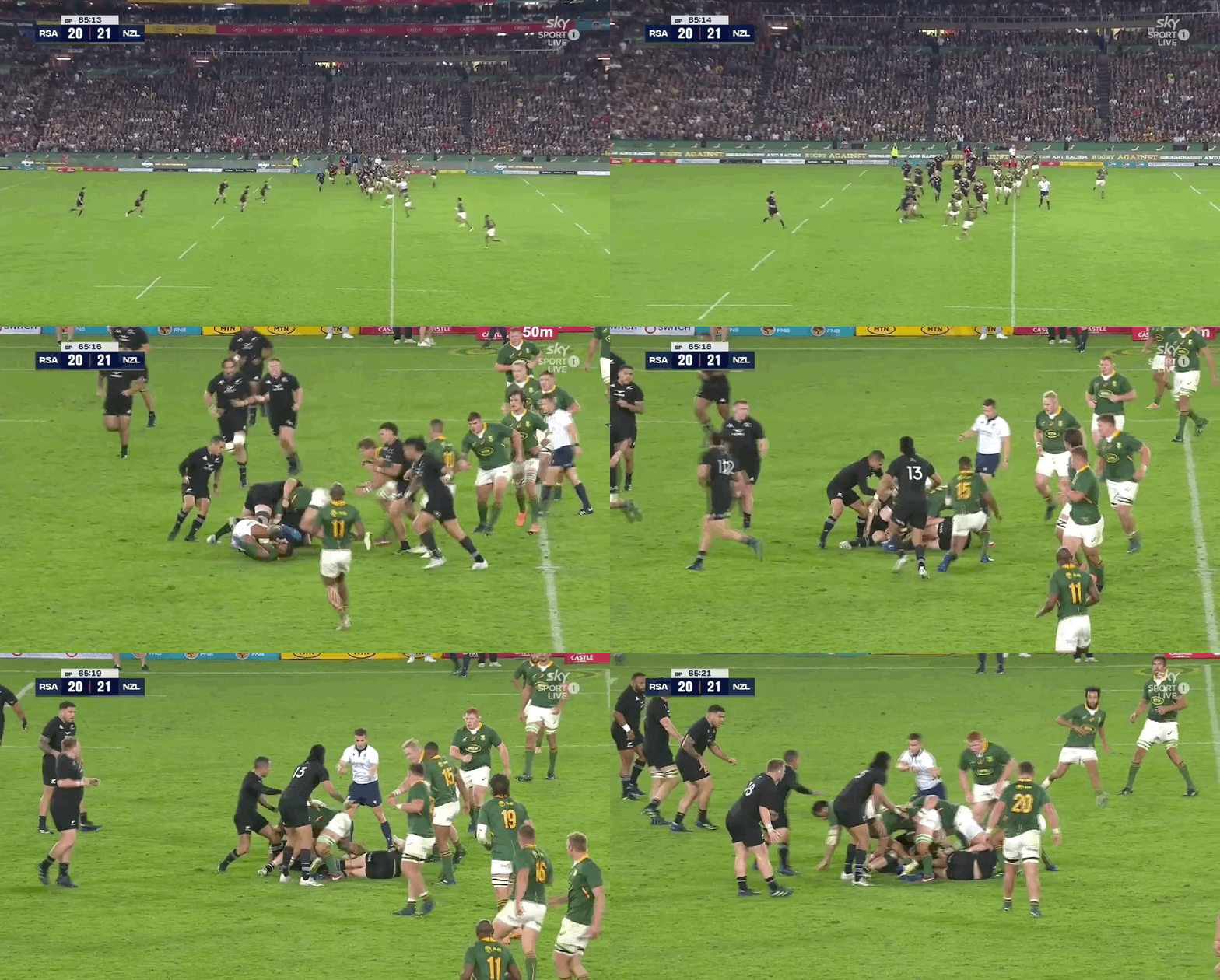
The second element of their defence is the focus on the breakdown. A big influence on this was their prioritising of the second action. Take this clip from their match versus the Kiwis last year. The Springboks make the tackle on first phase on the gain line. But rather than settle for that Damien De Allende and Kwagga Smith immediately disrupt the breakdown. The counter drive is superb and the Springboks secure possession.
Summing up the Springboks
With the Rugby Championship starting this weekend the Springboks will look to hit the ground running. Crucial for that will be getting their attack to the next level and consistently firing. The Springboks have only scored the most points in the Rugby Championship once in the last 4 years and they went on to win the World Cup in Japan later that year. Crucial to their attacking success will be Willie Le Roux and the link up play he offers. If Australia can’t contain him this Saturday they could be in for a long day. On the other side of the ball expect South Africa to bring their high risk high reward defence. The trust and work rate in their system is something to be marvelled at and could propel them to a second World Cup in a row later this year.
 The Analysis Guy