
As this barren period of rugby continues, it is important to continue to learn and develop. So while the Barbarians with little preparation time may not seem the best team to learn tactical developments from. Looking back to their game against the Springboks in 2016 provides some real insight into turnover attack. This aspect of rugby is the perfect blend of order and chaos, as such playing perfectly to the Barbarians strengths.
In this blog we will examine both of Luke Moharan’s tries, which profited from the disorganised South African defence. The first one came in the 54th minute of the entertaining match with a steal from Akker van der Merwe.
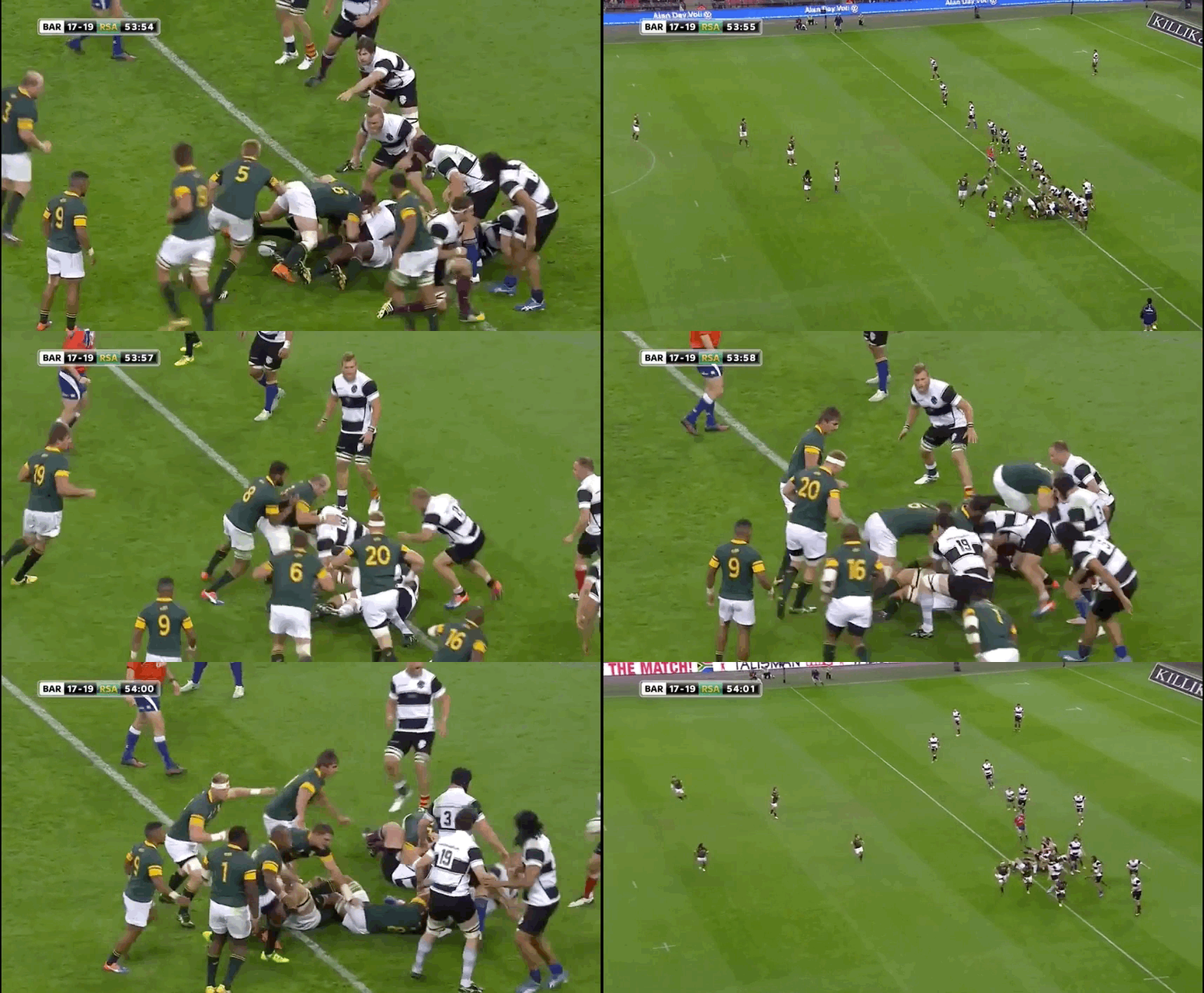
When South Africa pick and go around the corner, there are three key defenders involved. The tackle is important with number 18 Toby Smith’s role in taking out the supporting latcher and pulling him around the ball rather than over it allows Akker the second he needs to steal the ball. Akker, the second key player is clearly the quickest thinking player with four or five springboks milling about whilst he rips the ball free. The final key player is Andy Ellis, the scrum half. Having played a role in disrupting the previous ruck he is seen returning to the line. However, once he sees the turnover is won he drops immediately to give himself space and allow the barbarians to spark.

From the turnover they manage to spread the ball. Taqele Naiyaravoro manages to break and back makes ground deep in the SA half. He then experiments in typical Barbarians fashion. Tossing the ball inside as he is tackled it means Ellis can continue the attack. Ellis has the advantage, coming against a broken South African defence. Lambie is easily beaten as he realigns, and Ellis has time to kick and crucially find grass.

This screenshot taken just prior to the first bounce, shows the key of the second line of defence. South Africa are retreating from a tight phase of attack and have 3 players tight together, with Mounga the only Barbarians representative. Instead the remaining Barbarian have maintained a slight width on their chase. Understanding the need to shut off Ulengo’s angle, the second line of defenders are ready to apply pressure if Mounga fails to gather.

This becomes even clearer once Ulengo has gathered the ball. With the game at Wembley, the ingoal areas are smaller than typical and don’t allow Ulengo as much space to maneuver. Mounga’s pressure and the pincer of the remaining BaaBaa defenders, should all lead to a kick out. However, Ulengo’s kick drifts in field, finding the human wrecking ball, Taqele Naiyaravoro.

While South Africa are able to muster a partial defence it can’t prevent the score. However, this is only brought around because of Naiyaravoro’s actions. Having received the ball nearer the touchline, he arcs towards the posts draws in 2 defenders. The Barbarians continue to attack against the disorgainsided defence with a simple basketball pass to Toby Booth who shows delicate hands to beat Lambie and work with Jordan Taufua to free the outside attackers.
Following this Brad Shields straightens the line. By holding the scrambling defenders he also induces more panic in Springbok ranks. Ruan Combrinck’s misjudged angle allows Moharan a relatively simple finish on the outside. This simple execution of skills takes advantage of the chaos. From missed touch to missed tackles the Barbarians are able to work and score on the South African edge.
However, while Moharan’s first try relied on speed and rapid attack, his second took a simpler and more patient build up. The two contrasting tries provide key messages which can be applied once the rugby returns.

The Barbarians have been pushed lateral on the previous phase but are intent on building pressure. To do this they slide a simple kick in behind. From here, they attack the ruck and turn the ball over out wide. Seta Tamanivalu plays the key role here. The outside centre initially goes for the ball, and locks on. He is also more central than the South African cleaners who arrive at separate times. This means that Petersen swims past the ball whilst Tamanivalu can absorb the hit from 6, Roelof Smit. This allows a simple, if slow turnover.

From the turnover, the Barbarians begin setting a platform. With Michael Fatiolofa angling inwards, it means he draws 2 to South African tacklers. While there is some option for inter pod play, Fatilofa instead carries hard and is held by Carr and the ball is slowed.

Again the Barbarians carry off 9. By floating a pass to the fourth carrier it splits the south african defence. By starting opposite a gap, Sam Carter is able to cause the outside defender, Francois Venter, to step in as well as dragging out the two tacklers from their position in the defensive line. This wide carrying off 9 slows down the fold and contacts the Springbok defence.

In the following phase the ball is quick and South Africa are on the back front with a clear gap forming between the three defenders folding around the corner. Andy Ellis snipes draws the two guard defenders, with Mounga drifting to Pieter-Steph Du Toit’s outside shoulder. This slight loop also draws in Francois Venter. This means that South Africa’s key linking defender has been drawn away from his role.

This means the Barbarians can attack the width. They have forced forwards to wrap round, slowing the fold leaving a 3 on 2 in the 15 meter channel. In an effort to shut the ball off Rohan Janse van Rensburg jumps slightly out of line. This means Moharan can cut underneath, beating winger Ulengo with a slight change of line.
So while both tries were scored in much the same way, with simple handling exposing the left edge of the Springboks defence. It is the work prior to the tries that sets them apart. With a barmy and flamboyant style wrapped around the first score, followed by a second score of simple pragmatism and patience. Despite the differences, there is a simple message. By creating order faster than the Springboks, the Barbarians were in constant control. This enables clarity to execute the simple finishes.
 The Analysis Guy